What does an EV really cost to run? The whole bill.
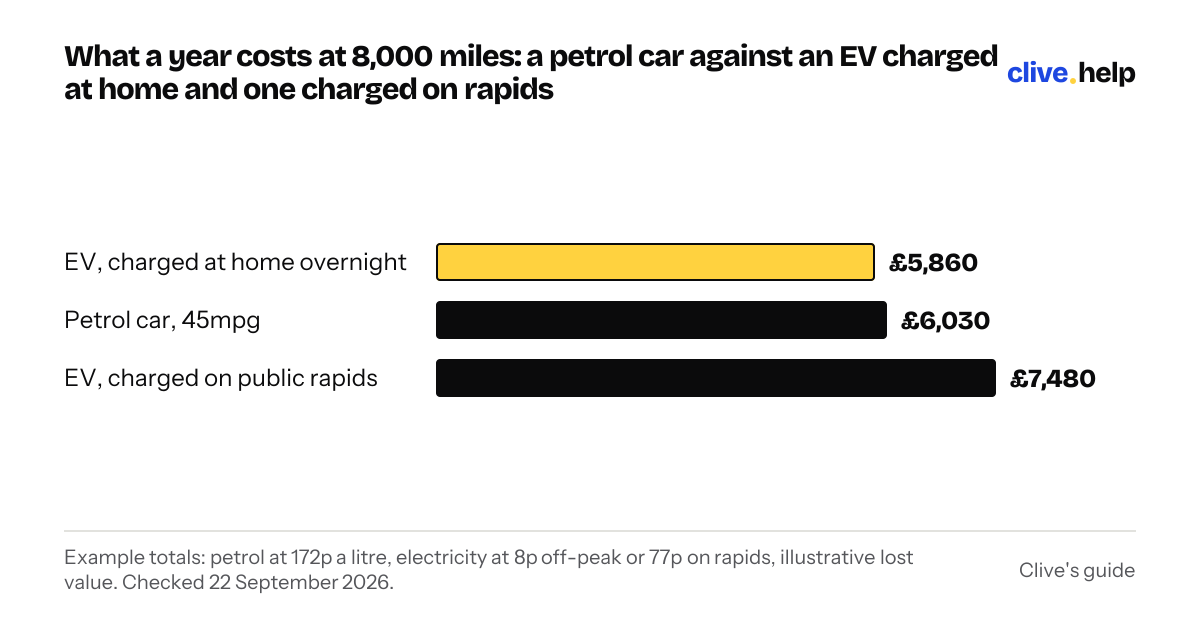
About £5,800 a year for an example EV against £6,000 for a comparable petrol car at 8,000 miles, if you charge at home overnight. The electricity is £190 against £1,390 of petrol, tax and servicing are close, and lost value, on example list prices, takes most of the saving back. Charge on public rapids and the petrol car wins.
What does the electricity cost?
Charging at home overnight costs about 2p a mile, home charging on the standard rate 8p, and public rapid charging 23p, against about 17p a mile for petrol.
This is the line that decides everything, so start here. An EV does about 3.4 miles per kWh, so 8,000 miles a year is 2,350kWh. Intelligent Octopus Gosells that between 11.30pm and 5.30am for 8p a kWh from 1 October 2026, which is £190 a year, or 2p a mile. On the Ofgem price cap, 26.32p a kWh from October to December 2026, the same year is £620, or 8p a mile. On the public network Zapmap's August 2026 average is 54p for slow and fast chargers and 77p for rapids, which is £1,270 and £1,810 a year, or 16p and 23p a mile.
A 45mpg petrol car at 172p a litre, the UK average for the week ending 21 September 2026, is about 17p a mile, or £1,390 for the same 8,000 miles. So the EV saves you £1,200 a year on fuel if you have a driveway and an EV tariff, £770 if you have a driveway and don't, and costs you £420 more if you live on rapids. Everything else on this page is smaller than that gap.
The two things that move it are the tariff and the driveway. The tariff guide ranks the off-peak rates; the home charging guide does the sums by battery size; and if you haven't got a driveway, that's a page of its own.
How much is road tax on an EV now?
An EV registered from April 2025 pays £10 for its first year and £200 a year after that, plus £440 a year for five years if it cost more than £50,000 new.
The free ride ended on 1 April 2025. A new EV now pays £10 for its first year and the standard rate, £200 a year from April 2026, after that. EVs registered between April 2017 and March 2025 pay the same £200; older ones, registered between 2001 and 2017, pay £20. A petrol car pays the same £200 standard rate, so on this line the two are level, and the first year is where a petrol car loses: a 111 to 130g/km petrol car pays £455 in year one against the EV's £10.
The catch is the expensive car supplement: £440 a year on top for 2026/27, for five years from the second year, on any car with a list price over £50,000 for an EV or £40,000 for petrol. Plenty of family EVs sit either side of that line, so check the list price of the exact spec before you sign, because £2,200 over five years is a real number. The road tax guide has the whole table.
What a year costs, line by line, for a typical EV and a comparable petrol car at 8,000 miles a year.
| Line | Petrol car (45mpg) | EV, charged at home overnight | EV, charged on public rapids |
|---|---|---|---|
| Fuel or electricity | £1,390 | £190 | £1,810 |
| Road tax (standard rate) | £200 | £200 | £200 |
| Insurance (Confused.com averages) | £733 | £607 | £607 |
| Servicing | £205 | £165 | £165 |
| Value lost (example: £28,000 petrol car at 37%, £35,000 EV at 40%, over three years) | £3,500 | £4,700 | £4,700 |
| Total for the year | £6,030 | £5,860 | £7,480 |
Petrol at 172p a litre (PetrolPrices.co.uk, week ending 21 September 2026); electricity at 8p off-peak (Intelligent Octopus Go) and 77p on rapids (Zapmap, August 2026), at 3.4 miles per kWh; tax from GOV.UK; insurance from Confused.com, March to May 2026; servicing from BestChargers and The Electric Car Scheme. The value-lost line is an example using Cox Automotive's three-year depreciation ranges on illustrative list prices. Last checked 22 September 2026.
Example figuresIs an EV dearer to insure?
Not always: Confused.com's own quotes from March to May 2026 averaged £607 for an electric car against £733 for petrol, though EVs cost more to repair when they do go wrong.
You'll read that EVs are dearer to insure, and for a few years they were. The picture has moved. Confused.com's average comprehensive premium for March to May 2026 was £607 for an electric car, £733 for petrol and £732 for diesel. That's their customers, not the whole market, and it says as much about who buys EVs as about the cars, but it's the fairest single number I can find and it points the other way from the folklore.
The caveat: an EV that gets hit costs more to put right. Thatcham Research put electric claims at 25.5% dearer than petrol ones and 14% slower to repair in July 2023, and the gap has been closing since. Specialist parts, fewer trained body shops, and a battery pack worth thousands sitting under the floor. So a premium quote for the exact car matters more than any average, and a small EV with a modest list price is usually cheap to cover. Get the quote before the test drive, not after.
What about servicing and tyres?
Servicing an EV costs about £165 a year against £205 for a petrol car, and tyres add £50 to £100 a year because EVs are heavier and wear them faster.
An EV has no oil, no filters to speak of, no clutch, no exhaust and no timing belt, and the brakes last for years because the motor does most of the slowing. So a service is mostly a look round, a pollen filter and a software check: about £165 a year on average in 2026, against about £205 for a petrol car. Some makers stretch the interval to two years, which halves that again.
Tyres are the one wear item that goes the other way. An EV is heavier and pulls harder from a standstill, so the driven tyres go every 20,000 to 25,000 miles rather than 30,000, at £80 to £150 a corner. Spread out, that's £50 to £100 a year more than a petrol car. Put the two together and the EV is still £40 to £80 a year cheaper on this line, which is nice, but it isn't what decides the sum.
How much value does an EV lose?
About 38 to 42% in three years against 35 to 40% for a petrol car, which on a £35,000 EV is roughly £4,700 a year, and it's the line that eats most of the fuel saving.
This is the line that eats the fuel saving. Cox Automotive's figures for late 2025 put average EV depreciation at 38 to 42% after three years against 35 to 40% for petrol. The gap is a few points, but EVs cost more to start with, so the pounds are bigger: a £35,000 EV losing 40% is £14,000 gone in three years, about £4,700 a year, where a £28,000 petrol car losing 37% is £10,400, or £3,500 a year. That £1,200 a year is almost exactly the fuel saving.
Two things soften it. Used EV prices stopped falling in 2026: Auto Trader's index had them up 3.3% year on year in July, with three-to-five-year-old cars up 10.2%, so the worst is probably behind anyone buying now. And the spread between models is enormous. Some hold 70% of their value, some hold 30%, and the difference is mostly badge and battery health. Buy a car people want second-hand, or buy the second-hand one yourself and let someone else take the first hit.
So is an EV cheaper to run than petrol or not?
Roughly level, with a £200 edge to the EV, if you charge at home overnight; level if you charge on the standard rate; and no if you rely on public rapid chargers.
Add the lines up for 8,000 miles a year. The EV, charged overnight on an EV tariff: £190 electricity, £200 tax, £607 insurance, £165 servicing and £4,700 lost value, about £5,860. The petrol car: £1,390 fuel, £200 tax, £733 insurance, £205 servicing and £3,500 lost value, about £6,030. The EV comes out under £200 ahead, and every pound of that comes from plugging in at home after midnight. That margin is smaller than the uncertainty in the lost-value line, which uses example list prices, so read it as level with a small edge to the EV rather than a win.
Move the charging and the answer moves with it. On the price cap the EV's electricity is £620 and the two cars are level. On public rapids it's £1,810 and the petrol car is £1,400 a year cheaper. Drive 15,000 miles instead of 8,000 and the home-charged EV pulls £2,000 clear, because the fuel saving scales and the depreciation doesn't. That's the whole answer: an EV is cheap to run when it's cheap to charge, and the rest of the bill is a wash.
The numbers above are for one petrol car and one EV. Yours will be different, which is the point of the cost calculator: it does these sums with your own car, your miles and your tariff. The steps below are the same sums with a pencil.
Sources
- Ofgem: energy price cap unit rates and standing charges, 1 October to 31 December 2026, checked 21 September 2026
- Octopus Energy: Intelligent Octopus Go rates, checked 21 September 2026
- Zapmap Price Index, August 2026, checked 21 September 2026
- PetrolPrices.co.uk fuel price index, week ending 21 September 2026, checked 22 September 2026
- GOV.UK: vehicle tax for electric and low emission vehicles, checked 22 September 2026
- GOV.UK: vehicle tax rates, checked 22 September 2026
- Confused.com: electric car insurance, average premiums March to May 2026, checked 22 September 2026
- Thatcham Research: BEV incident claims 25.5% dearer and 14% longer to repair than ICE, July 2023, checked 22 September 2026
- BestChargers: electric car servicing costs UK 2026, checked 22 September 2026
- The Electric Car Scheme: electric car maintenance and servicing, May 2026, checked 22 September 2026
- Cox Automotive: EV vs ICE depreciation and residual values explained, August 2026, checked 22 September 2026
- Motor Trader: Auto Trader Retail Price Index, used EV prices, July 2026, checked 22 September 2026
Read next
- How much does it cost to charge an EV at home?A full charge at home costs £3 to £7 on an EV tariff and £10 to £21 on the price cap, by battery size. The cost per mile, a year's charging, and solar.
- EV road tax: what you pay now, and over five yearsElectric cars pay road tax: £10 in the first year, then £200 a year, plus £440 a year for five years if the list price is over £50,000. The five-year sums.
- Corsa Electric vs Corsa: what each really costs a yearThe electric Corsa saves £1,000 a year on fuel, then loses more than that in value at list price. Each line at 8,000 miles, and the discount that flips it.
- MG4 vs Ford Focus: what each really costs a yearThe MG4 against a petrol Focus, line by line at 8,000 miles a year: electricity or fuel, tax, insurance, servicing and what each loses in value.
- Renault 5 vs Clio: what each really costs a yearA Renault 5 charged at home costs £4,980 a year against £5,910 for a petrol Clio at 8,000 miles. Fuel, tax, insurance, servicing and lost value.
- Tesla Model 3 vs BMW 3 Series: what each really costs a yearA Model 3 against a petrol 320i at 8,000 miles a year, line by line: electricity or fuel, tax and the £50,000 supplement, insurance, servicing, lost value.
- Peugeot e-208 vs 208: what each really costs a yearThe e-208 saves £940 a year on fuel and loses £3,200 a year more in value at list price, so the petrol 208 wins by £2,300 unless you buy at the discount.
- VW ID.3 vs Golf: what each really costs a yearThe ID.3 against a petrol Golf, line by line at 8,000 miles a year: electricity or fuel, tax, insurance, servicing and what each loses in value.
- Kona Electric vs Kona: what each really costs a yearThe Kona Electric costs about £600 a year less to run than the petrol Kona at 8,000 miles, if it charges at home overnight. Every line, and where it flips.
- EV servicing costs explainedAn EV service is £70 to £130 a year against £170 to £250 for petrol, on published plans. What the garage does, the intervals, tyres, brakes and the traps.
- Is an EV dearer to insure?Not on average: 2026 quotes put an EV at £607 a year against £733 for petrol. Why repairs cost more, the cheapest EVs to cover, and how to cut the premium.
- EV depreciation: how much value does it really lose?EVs lose 38 to 42% in three years against 35 to 40% for petrol, and used prices are rising after a 40-month fall. Which hold up, and how to limit it.
- Second-hand EV vs new petrol: five years of costA three-year-old MG4 at £13,149 against a new Kia Ceed at £23,795 over five years: about £13,700 against £27,700 all in, and the used EV wins from day one.
- What a home charger costs to fitA 7kW home charger is £950 to £1,150 fitted in 2026, more with a long cable run or an old fuse box. The prices, the £500 grants, and whether you need one.