EV servicing costs explained
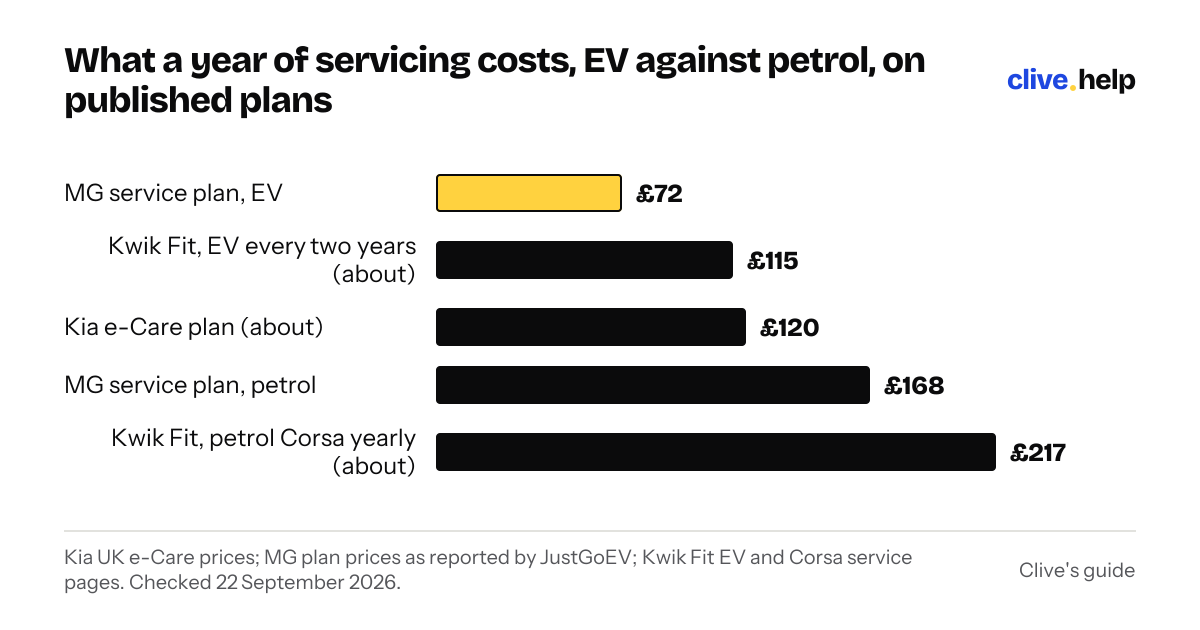
Less than petrol. On the published numbers an EV costs about £70 to £130 a year to service against £170 to £250 for a petrol car, because there's no oil, no filters and no belts, and most makers only want to see it every two years. Tyres are the line that goes the other way.
What does an EV service cost?
About £70 to £130 a year on a maker's plan, or £115 to £230 for a single service at a fast-fit chain, against £170 to £250 a year for a petrol car.
Start with the prices the makers publish. Kia says a three-year e-Care plan starts at £389 for an EV6 and £329 for a Niro EV, which is £110 to £130 a year. MG launched its electric service plan at £6 a month against £14 a month for a petrol MG, which is £72 a year against £168; those are January 2022 prices and the only maker I found that publishes the two side by side. The rest, Hyundai and Vauxhall included, want your registration before they'll quote.
The fast-fit chains fill the gap. Kwik Fit charges £227.95 for its EV service, every two years or 20,000 miles, so about £115 a year. Its Corsa page puts a petrol Corsa's full service from £246.95 and an interim from £186.95, and a petrol car wants one of those every year. The electric Corsa's service on the same page is from £230.95, every other year.
So the gap isn't the price of a visit, which is much the same. It's that the EV makes half as many visits. Over three years that's roughly £350 on the EV against £600 to £750 on the petrol car, which is the number I use on the whole running-cost page.
What does the garage actually do?
Checks, mostly: tyres rotated, brakes cleaned, a battery health report, fault codes read, software updated, and a pollen filter and brake fluid when they're due.
I've done a lot of petrol services, and most of the bill is things you drain, unscrew and throw away: oil, oil filter, air filter, plugs, a belt every few years. An EV has none of them. Kia's e-Care list is tyre rotation, brake cleaning, a battery state-of-health report, a scan for fault codes, software updates and a health checklist. Volkswagen's ID inspection is the charging components checked for wear and corrosion, the battery's current capacity measured against its original, and the brakes, lights and tyres looked at.
Two things do get replaced on a schedule. The pollen filter, because you breathe through it. And brake fluid, usually every two years, because it absorbs water whether you brake or not. Kwik Fit's £227.95 covers both plus wheel balancing, and that's about all the consumables there are.
The battery report is the part worth reading. It's a percentage of the capacity the car left the factory with, and it's what a buyer will ask for when you sell. Keep the printout.
What a service costs, EV against petrol, from the prices makers and garages publish, and what that comes to a year.
| Where | EV | Petrol | Per year, EV against petrol |
|---|---|---|---|
| MG service plan (January 2022 prices) | £6 a month | £14 a month | £72 against £168 |
| Kia e-Care three-year plan | £329 (Niro EV) to £389 (EV6) | Quote only | £110 to £130 against not published |
| Kwik Fit, EV service every two years | £227.95 | About £115 | |
| Kwik Fit, Vauxhall Corsa, yearly | £230.95 every two years | £186.95 interim, £246.95 full | About £115 against £187 to £247 |
| Volkswagen ID range | Inspection every two years, no mileage limit | Yearly | Half the visits |
Kia UK e-Care prices; JustGoEV report of MG's plan launch, January 2022; Kwik Fit's EV service and Corsa pages; Volkswagen UK servicing page. Last checked 22 September 2026.
How often does an EV need a service?
Every two years for most makes, with a shorter check in between on some, against every year or 10,000 to 12,500 miles for a petrol car.
Kia says a full service every other year, with the battery checked more often. Volkswagen's ID range has no mileage interval at all, just an inspection every two years. Kwik Fit's EV schedule is two years or 20,000 miles. A petrol car on the same forecourts is a year or so, and the interim-plus-full pattern the chains sell is really two visits a year.
That interval is where most of the saving lives, and it's also the thing to watch on a warranty. A maker that says two years means two years: miss it and a battery claim gets harder. Put the date in the calendar when you drive the car home, because nothing under the bonnet will remind you.
The MOT is unchanged. From three years old an EV needs one every year like any other car, and the test is shorter because there's no emissions check.
What about tyres and brakes?
Tyres wear faster on an EV, by up to a fifth on Michelin's figure, and brakes wear slower but can seize from under-use, so both need looking at rather than left.
Tyres are the one line an EV loses on. Michelin says tyres wear out up to 20% faster on an EV than on a petrol car, from the weight and the instant pull away from the lights. The UK MOT record backs it up in a smaller way: CarHunchwent through the 2018 to 2021 tests and found 165 tyre failures per 1,000 EV tests against 152 for petrol, 8% more, on a fleet that was younger on average. Kwik Fit makes the fair counterpoint: a tyre built for an EV wears about 30% slower than a standard one on the same car, so fit the EV tyre, even though it costs more at the till. Budget for a front pair a year or two sooner than you would on the petrol car.
Brakes go the other way, and it's the odd one. The motor does most of the slowing down, so pads and discs last years. The catch is that a brake you rarely use rusts, and rusty brakes bind, especially as they warm up, because the disc never gets hot enough to dry itself. A seized rear caliper is now the EV job I see most. The fix is free: once a week, brake properly from 40mph with the regen turned down, and get the wheels off at every service so someone looks.
Where do the surprise bills come from?
The 12-volt battery, tyres, seized brakes, and anything electronic that fails out of warranty, in that order, though an EV still breaks down less than half as often as a petrol car.
The little battery, not the big one. Every EV keeps an ordinary 12-volt battery to wake the car up, and the German breakdown service ADAC found it behind 50.5% of EV callouts in 2025, against 44.6% for petrol and diesel. It's an £80 to £150 part on most cars, and the symptom is a car that won't start with a full traction battery. If it's over four years old and the car sits for days between drives, replace it before winter.
Then tyres, which I've covered, and seized brakes, which I've covered. After that it's the electronics: a charging port door, a heat pump, a screen. Inside the warranty they're free; outside it they're dealer money, and the independent garages are still catching up on EV diagnostics. The battery guide has the warranty terms by maker.
Keep the whole thing in proportion. The same ADAC data has a two-to-four-year-old EV breaking down 3.8 times per 1,000 cars a year against 9.4 for petrol and diesel. Fewer parts, fewer surprises. The bills that do come are smaller and rarer than the ones you're used to, and the insurance guide covers the one place an EV repair really does cost more.
Sources
- Kia UK: do electric cars need servicing and an MOT? (e-Care plan prices for EV6 and Niro EV), checked 22 September 2026
- Kia UK: e-Care service plans, what's included, checked 22 September 2026
- JustGoEV: MG launches £6 a month electric car service plan, 26 January 2022, checked 22 September 2026
- Volkswagen UK: electric car servicing and maintenance, the ID inspection service, checked 22 September 2026
- Kwik Fit: electric vehicle service, price and interval, checked 22 September 2026
- Kwik Fit: Vauxhall Corsa service prices, petrol and electric, checked 22 September 2026
- Michelin UK: the new demands of EVs on tyres, 13 September 2023, checked 22 September 2026
- Kwik Fit: do electric car tyres wear slower than normal tyres? 18 September 2023, checked 22 September 2026
- CarHunch: do electric cars wear tyres faster? UK MOT data 2018 to 2021, 21 July 2026, checked 22 September 2026
- DiscoverEV: electric and hybrid vehicles, brake issues, checked 22 September 2026
- The Electric Car Scheme: do electric cars break down more than petrol cars? ADAC 2025 data, 23 February 2026, checked 22 September 2026
Read next
- What does an EV really cost to run? The whole bill.Charged at home at night, an EV costs about £200 a year less than a petrol car once tax, insurance, servicing and lost value are in. On rapids it's dearer.
- Is an EV dearer to insure?Not on average: 2026 quotes put an EV at £607 a year against £733 for petrol. Why repairs cost more, the cheapest EVs to cover, and how to cut the premium.
- EV depreciation: how much value does it really lose?EVs lose 38 to 42% in three years against 35 to 40% for petrol, and used prices are rising after a 40-month fall. Which hold up, and how to limit it.