VW ID.3 vs Golf: what each really costs a year
Level at 8,000 miles: about £7,000 a year each if the ID.3 charges at home overnight. The ID.3 saves £1,000 a year on fuel and £445 on first-year tax, then gives it back in lost value, because it costs £5,500 more to buy and loses half of it in three years. Drive 12,000 miles and the ID.3 pulls £500 ahead.
What does the fuel or electricity cost?
About £160 a year for the ID.3 on an overnight EV tariff, £520 on the price cap, and £1,175 of petrol for the Golf at its official 53.3mpg.
Two cars from the same firm, and in 2026 they cost nearly the same to buy. The ID.3 Pro Essential is £35,740 with the 59kWh battery and 269 miles of official range, and with the £1,500 Electric Car Grant EV Database has it on the road at £34,240. Its official consumption is 246Wh a mile, which is 4.1 miles per kWh, better than the 3.4 the rest of this site assumes, so I've used the ID.3's own figure. Auto Express got 3.4 out of the smaller-battery car on a long test, and I'll come back to what that does to the sums.
The Golf starts at £28,675 in July 2026 for the 1.5 TSI 115 Life, with an official 53.3mpg and 120g/km. That is the petrol car here: the entry engine, because it's the one that gets the mpg, and the Life trim, because it's the one that gets the price. The 150hp Match is £29,076 and does 52mpg, so the sums barely move if you'd rather have that one.
Now the miles. 8,000 a year in the ID.3 is about 1,970kWh. On Intelligent Octopus Go, which is 8p a kWh between 11.30pm and 5.30am from 1 October 2026, that's £160 a year. On the Ofgem price cap of 26.32p a kWh from October to December 2026 it's £520. On public rapids at Zapmap's 77p August average it's £1,520. At Auto Express's real-world 3.4 miles per kWh, add a fifth to each: £190, £620 and £1,810.
The Golf at 53.3mpg needs about 682 litres for the same 8,000 miles, and at 172p a litre, the UK average in the week ending 21 September 2026, that's £1,175. Real-world petrol cars miss their official figure too, so call the fair gap on this line £1,000 a year with a driveway. It's the biggest saving the ID.3 makes anywhere on the page, and everything that follows is about what eats it.
What are the tax, insurance and servicing lines?
Road tax is £200 a year for both after the first year, the ID.3 costs about £40 more to insure on 2026 averages, and servicing is about £185 a year for the ID.3 against £210 for the Golf at an independent.
Tax. Both pay the £200 standard rate from year two, and neither is near the £50,000 or £40,000 expensive-car lines. Year one is the difference: the ID.3 pays £10, and a 120g/km Golf pays £455. That £445 is real money, but it happens once. The road tax guide has the whole table.
Insurance. Closer than the folklore says. Car Insurance Expert puts a typical ID.3, groups 22 to 24 for the Pro Essential, at about £660 a year comprehensive for a 35-year-old with a clean licence and three years' no-claims, on second-quarter 2026 data. The same site has the Golf Match, group 17 for the 1.5 TSI, at about £620 on the same sort of driver. £40 a year is the gap, and your postcode will move it more than the badge does. Get both quotes before you sign anything.
Servicing. The ID.3 wants an annual check rather than a service: MyRepairCost puts a full one at £150 to £225 at an independent in 2026, and there's no oil, no plugs and no cambelt in it. The Golf's full service is £160 to £260, every 12 months. Take the middle of each and it's £185 against £210 a year. Volkswagen's own plans tell the same story: a Group 1 dealer sells the ID plan from £360 and the petrol fixed-price plan at £522, both covering two years' servicing at a main dealer. The servicing guide goes through what the garage actually does on each.
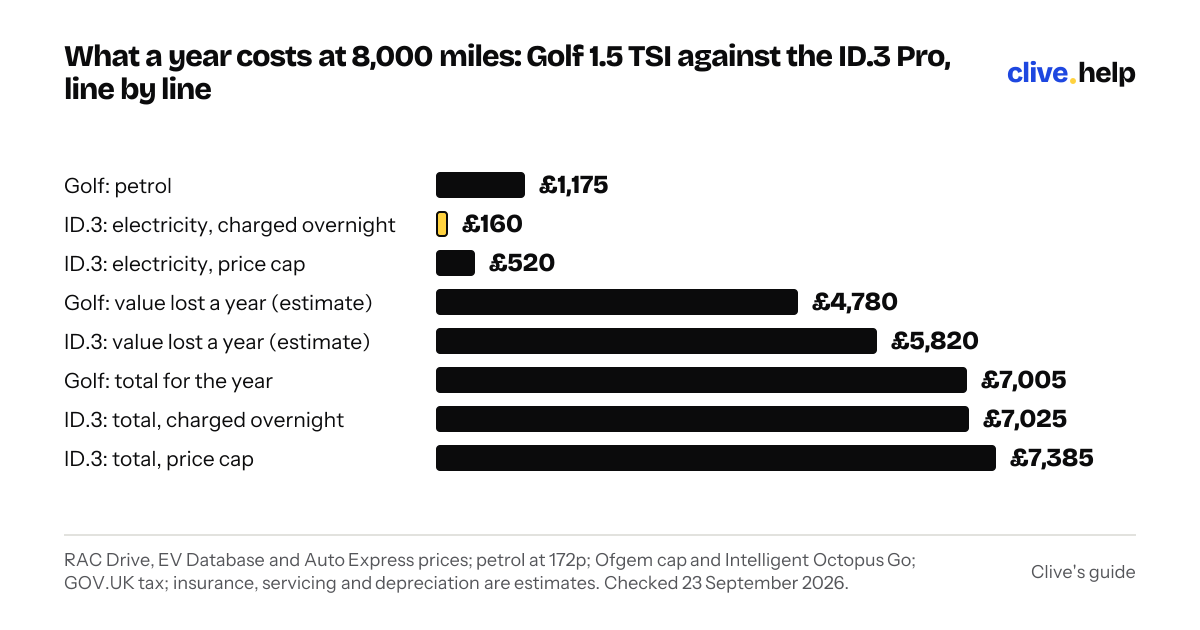
What a year costs, line by line, at 8,000 miles: the ID.3 Pro Essential against the Golf 1.5 TSI 115 Life.
| Line | Golf 1.5 TSI 115 (petrol) | ID.3 Pro, charged overnight | ID.3 Pro, price cap |
|---|---|---|---|
| Price to buy (Golf list; ID.3 after the £1,500 grant) | £28,675 (July 2026) | £34,240 (2026) | £34,240 |
| Fuel or electricity (53.3mpg at 172p; 4.1 miles per kWh at 8p or 26.32p) | £1,175 | £160 | £520 |
| Road tax (standard rate; first year £455 vs £10) | £200 | £200 | £200 |
| Insurance (Car Insurance Expert averages, Q2 and September 2026) | £620 | £660 | £660 |
| Servicing at an independent, middle of the range | £210 | £185 | £185 |
| Value lost per year (estimate: Golf 50%, ID.3 51% over three years) | £4,780 | £5,820 | £5,820 |
| Total for the year | £7,005 | £7,025 | £7,385 |
Prices and specs from RAC Drive, EV Database and Auto Express (July 2026); petrol at 172p (PetrolPrices.co.uk, week ending 21 September 2026); electricity from Ofgem's October to December 2026 cap and Intelligent Octopus Go; tax from GOV.UK; insurance from Car Insurance Expert; servicing from MyRepairCost; ID.3 depreciation from Used Car Stats (21 September 2026) and the Golf's is the middle of Free Plate Check's 44% and Auto Express's 52 to 60% lost. The insurance, servicing and value lines are estimates. Last checked 23 September 2026.
Example figuresWhich one loses more value?
The ID.3, in pounds: it loses about 51% of a higher price in three years, roughly £5,800 a year, against about £4,800 for a Golf that loses around half.
This is the line that decides it, so here's the working. Used Car Stats, updated on 21 September 2026, has the ID.3 Pro losing 51% of its value in three years, and it blames fleet volumes: a lot of ex-company ID.3s come back at once and drag the price down. On the £34,240 you'd pay after the grant, 51% is £17,460, or about £5,820 a year.
The Golf is harder to pin down, because the two estimates I found disagree. Free Plate Check has a Golf keeping 56% after three years; Auto Express expects the current car to keep 40 to 48%. I've gone down the middle and called it half. On £28,675 that's £14,340 gone in three years, or about £4,780 a year. If Free Plate Check is right, the Golf's line is £4,200 and it wins outright; if Auto Express is right, it's £5,300 and the ID.3 wins by a few hundred. That spread is the true width of this whole comparison.
Two things pull in the ID.3's favour. Used EV prices stopped falling in 2026 and were rising by the summer, so a car bought now may do better than the 51%. And the fastest way to dodge the line is to buy the three-year-old ID.3 that someone else took the 51% on: the used EV guide runs that sum, and the depreciation guide covers what moves it.
So which is cheaper to run?
Level at 8,000 miles with an overnight tariff, the Golf by about £400 on the price cap, and the Golf by about £1,400 if the ID.3 lives on public rapids.
Add the lines up, from the table. ID.3 charged overnight: £160 electricity, £200 tax, £660 insurance, £185 servicing and £5,820 lost value, about £7,025. Golf: £1,175 petrol, £200 tax, £620 insurance, £210 servicing and £4,780 lost value, about £7,005. Twenty pounds apart, which is level, and well inside the uncertainty of the value line. The ID.3 saves £1,000 on fuel and hands almost exactly £1,000 back in depreciation.
Move the charging and the answer moves. On the price cap the ID.3's electricity is £520 and the Golf is about £400 a year cheaper. On public rapids it's £1,520 and the Golf wins by about £1,400. Move the miles instead and it goes the other way: at 12,000 a year with a driveway the fuel gap grows to £1,500 and the ID.3 is about £500 ahead, because the value line doesn't care how far you drive. The whole running-cost page has the same shape for a generic pair of cars, and the tariff comparison is where the 8p comes from.
Who should pick which?
The ID.3 if you have a driveway and do 10,000 miles or more, or keep the car past three years; the Golf if you park on the street or change cars every three years.
- Driveway, EV tariff, 10,000 miles or more. The ID.3. The fuel saving scales with the miles and nothing else does, so by 12,000 miles it's £500 a year ahead and climbing.
- Driveway, 8,000 miles, changing the car every three years. A coin toss on the money, so pick on the driving. The ID.3 is quicker and quieter; the Golf has the better cabin and the bigger boot.
- Keeping it five years or more. The ID.3. The depreciation line fades once you stop selling, and the £1,000 a year on fuel keeps coming. The battery is warranted for eight years.
- Street parking. The Golf, on the money. Rapid charging at 77p a kWh costs more than petrol at 53mpg, and the no-driveway guide is where I say so properly. A lamppost charger after midnight brings the ID.3 back to roughly level.
- Buying used. The three-year-old ID.3, without much of a contest. Someone else has paid the 51%, and the running costs from there are the cheap lines only.
Sources
- RAC Drive: Volkswagen ID.3 review 2026, prices, range and insurance groups, checked 23 September 2026
- EV Database: Volkswagen ID.3 Pro, usable battery, WLTP efficiency and UK price with the Electric Car Grant, checked 23 September 2026
- Auto Express: Volkswagen Golf review, prices, mpg, insurance groups and residual value, 7 July 2026, checked 23 September 2026
- RAC Drive: Volkswagen Golf review, trim prices and insurance groups, checked 23 September 2026
- PetrolPrices.co.uk fuel price index, week ending 21 September 2026, checked 22 September 2026
- Ofgem: energy price cap unit rates and standing charges, 1 October to 31 December 2026, checked 21 September 2026
- Octopus Energy: Intelligent Octopus Go rates, checked 21 September 2026
- Zapmap Price Index, August 2026, checked 21 September 2026
- GOV.UK: vehicle tax rates, checked 22 September 2026
- GOV.UK: vehicle tax for electric and low emission vehicles, checked 22 September 2026
- Car Insurance Expert: Volkswagen ID.3 insurance cost UK 2026, updated 6 September 2026, checked 23 September 2026
- Car Insurance Expert: Volkswagen Golf Match insurance cost UK 2026, updated 9 September 2026, checked 23 September 2026
- MyRepairCost: Volkswagen ID.3 service cost UK 2026, checked 23 September 2026
- MyRepairCost: Volkswagen Golf service cost UK 2026, checked 23 September 2026
- Group 1 Volkswagen: service plan prices for ID models and petrol cars, checked 23 September 2026
- Used Car Stats: Volkswagen ID.3 depreciation, updated 21 September 2026, checked 23 September 2026
- Free Plate Check: Volkswagen Golf value retained after three and five years, 2026, checked 23 September 2026
Read next
- What does an EV really cost to run? The whole bill.Charged at home at night, an EV costs about £200 a year less than a petrol car once tax, insurance, servicing and lost value are in. On rapids it's dearer.
- Corsa Electric vs Corsa: what each really costs a yearThe electric Corsa saves £1,000 a year on fuel, then loses more than that in value at list price. Each line at 8,000 miles, and the discount that flips it.
- Renault 5 vs Clio: what each really costs a yearA Renault 5 charged at home costs £4,980 a year against £5,910 for a petrol Clio at 8,000 miles. Fuel, tax, insurance, servicing and lost value.