Renault 5 vs Clio: what each really costs a year
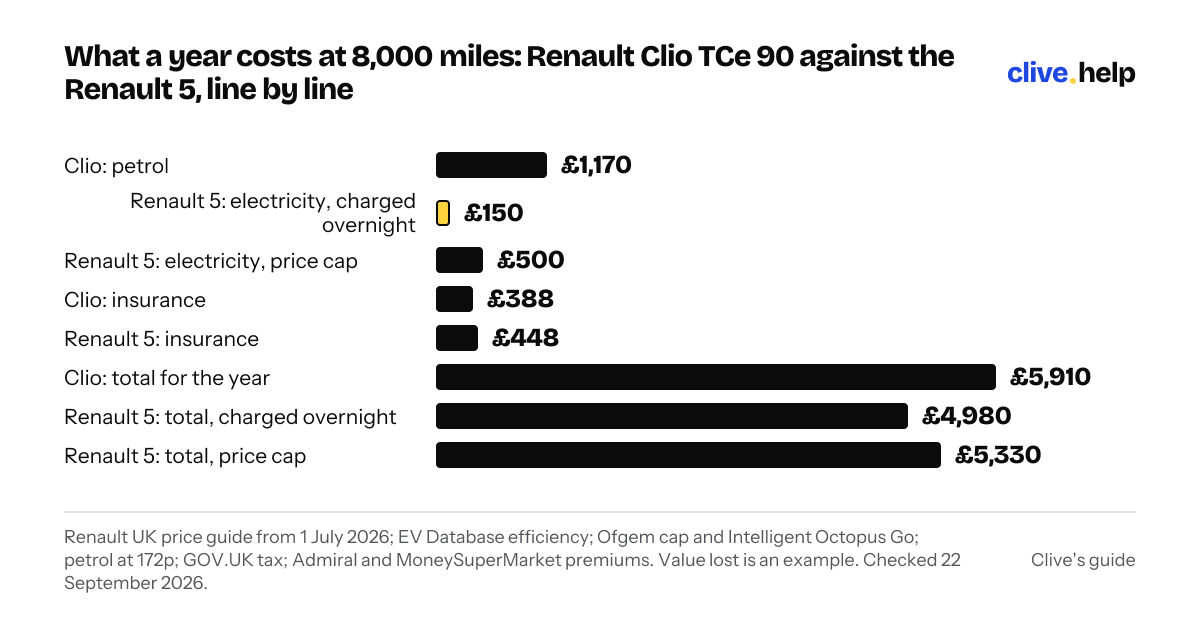
About £4,980 a year for a Renault 5 charged at home overnight against £5,910 for a petrol Clio, both in Techno trim at 8,000 miles a year. The electricity is £150 against £1,170 of petrol, the two lose almost the same value, and insurance and servicing are within £70. Charge on the price cap and the gap shrinks to £580.
What does the fuel or electricity cost?
At 8,000 miles a year the Renault 5 costs about £150 of electricity charged overnight, or £500 on the price cap, against about £1,170 of petrol for the Clio.
This is the line that decides it, so I'll show the working. The Renault 5 Techno+ has a 52kWh battery and an official WLTP consumption of 238Wh a mile, which is 4.2 miles per kWh, from EV Database. That's better than the 3.4 I use for a typical EV elsewhere on this site, because it's a small car, so I've used the car's own figure here. 8,000 miles is about 1,900kWh. On Intelligent Octopus Go at 8p a kWh overnight that's about £150 a year, or 2p a mile. On the Ofgem price cap for October to December 2026, 26.32p a kWh, it's about £500, or 6p a mile.
The Clio Techno esprit Alpine TCe 90 does 53.3mpg on the official combined cycle, from Renault's own price guide. At the UK average of 172p a litre for the week ending 21 September 2026, 8,000 miles is about 680 litres and £1,170, or 15p a mile. Official figures flatter a petrol car more than an electric one, so the real gap is a little wider than the table shows.
EV Database's real-world figure for the Renault 5 is 254Wh a mile, about 3.9 miles per kWh, which would add £10 a year overnight or £40 on the cap. Either way, the electricity is a tenth of the petrol if you can charge at home overnight, and that £1,000 a year is the whole reason to read on. If you can't plug in at home, the no-driveway guide has the public-charging sums, and they change this answer.
What are the tax, insurance and servicing lines?
Both pay £200 a year in tax after year one, the Renault 5 costs about £60 more a year to insure, and the service plans are within £15 of each other.
Tax. The Renault 5 pays £10 in its first year and £200 a year after that; the Clio, at 119g/km, pays £455 in year one and then the same £200, from the GOV.UK rate tables and Renault's price guide. Neither car is anywhere near the £50,000 or £40,000 expensive car supplement thresholds, so that's the whole tax story: a £445 saving for the EV in year one, then level. The road tax guide has the detail.
Insurance. The Renault 5 Techno+ is in insurance group 22E; the Clio TCe 90 is in group 11E, both from the price guide. In money, Admiral put the average Renault 5 premium at £448 a year between July 2025 and June 2026, which made it the cheapest mainstream EV they insure. MoneySuperMarket put the average comprehensive Clio premium at £388 for August 2025 to July 2026. Those are two different insurers' books, so treat the £60 gap as about right rather than exact, and get a quote for the exact car before you sign anything.
Servicing. Renault sells the same kind of plan for both. The EasyLife plan for the Renault 5 is £13.99 a month for three years or 30,000 miles, which is £168 a year. Parkers quotes the Clio's at £12.99 a month for the same three years, or £156. The EV has no oil, filters or exhaust to see to, but Renault prices the plans almost the same, so there's no saving to count on here. Tyres are the one wear item where the heavier EV costs a little more, and the servicing guide covers that.
What a year costs, line by line, for a Renault 5 Techno+ 52kWh and a Clio Techno esprit Alpine TCe 90 at 8,000 miles a year.
| Line | Renault 5, charged at home overnight | Renault 5, charged on the price cap | Clio TCe 90 |
|---|---|---|---|
| Price paid new (after the Electric Car Grant) | £23,945 | £23,945 | £20,995 |
| Electricity at 4.2 miles per kWh, or petrol at 53.3mpg | £150 | £500 | £1,170 |
| Road tax, standard rate (year one is £10 and £455) | £200 | £200 | £200 |
| Insurance, average premium | £448 | £448 | £388 |
| Servicing, Renault EasyLife plan | £168 | £168 | £156 |
| Value lost per year, three-year forecast | £4,010 | £4,010 | £3,990 |
| Total for the year | £4,980 | £5,330 | £5,910 |
Prices, mpg, CO2 and insurance groups from Renault's UK price guide valid from 1 July 2026; Renault 5 efficiency from EV Database (WLTP 238Wh a mile); electricity at 8p (Intelligent Octopus Go) and 26.32p (Ofgem cap, October to December 2026); petrol at 172p a litre (PetrolPrices.co.uk, week ending 21 September 2026); tax from GOV.UK; insurance from Admiral (Renault 5) and MoneySuperMarket (Clio); service plans from Renault UK and Parkers. The value-lost line is an example: residual forecasts of 44% (Business Car, May 2025) and 43% (CAP) are for 60,000 miles over three years, applied to the price paid. Last checked 22 September 2026.
Example figuresWhich one loses more value?
About the same, around £4,000 a year each over three years, because the Renault 5 holds 44% of its list price and the Clio 43%, and the grant takes £3,750 off what you paid for the EV.
This is the line most comparisons get wrong for an EV, so here are the forecasts and the sum. Business Car, using fleet residual data in May 2025, put the Renault 5 at 44% of its £26,930 P11D price after three years and 60,000 miles, which is £11,908 left. For the Clio TCe 90, CAP's forecast is 43% after three years, which on the £20,995 Techno is about £9,030 left.
Now the part that matters. You didn't pay £27,695 for the Renault 5; you paid £23,945 after the grant. So the loss is £23,945 less £11,908, which is about £12,040 over three years, or £4,010 a year. The Clio loses £20,995 less £9,030, which is £11,965, or £3,990 a year. Twenty pounds a year apart. The EV costs more to buy and loses a bigger share of its list price, and the grant cancels both out.
Two caveats, stated plainly. Both forecasts are for 60,000 miles in three years, which is more than double the 8,000 a year on this page, so a low-mileage car of either kind should be worth more than these numbers. And the Renault 5 figure is from May 2025, before the grant existed; a cheaper new car usually means a cheaper used one, so the 44% may drift down. That's why the table below is marked as example figures. The depreciation guide has the wider picture.
So which Renault is cheaper to run?
The Renault 5, by about £930 a year if you charge at home overnight and about £580 if you charge on the price cap, almost all of it from the fuel line.
Add it up for a year at 8,000 miles. The Renault 5 charged overnight: £150 electricity, £200 tax, £448 insurance, £168 servicing and £4,010 of lost value, about £4,980. On the price cap the electricity is £500 and the total about £5,330. The Clio: £1,170 petrol, £200 tax, £388 insurance, £156 servicing and £3,990 of lost value, about £5,910.
So the EV is £930 a year cheaper with an overnight tariff and £580 cheaper without one, and in year one add £445 for the tax. Over three years that's £2,800 to £4,100 in the Renault 5's favour, which is most of the £2,950 it costs extra to buy after the grant. Drive 12,000 miles instead and the fuel gap grows to £1,500 a year while nothing else moves much, so the EV pulls further ahead the more you drive.
It flips if the electricity isn't cheap. On public rapid chargers at Zapmap's 77p average the Renault 5's 1,900kWh would cost about £1,460, more than the Clio's petrol, and the EV would be about £300 a year dearer overall. Where the car sleeps decides this, not the badge. The whole running-cost page shows the same pattern for a typical EV and petrol car.
Who should pick which?
Pick the Renault 5 if you can charge at home and an EV tariff is on the cards, and the Clio if you park on the street, do long trips most weeks or can't find the extra £3,000 up front.
The Renault 5 is the better sum for anyone with a driveway and the will to switch tariff. The tariff guide shows which one; without it you keep £580 of the £930. It's also the better car for a low-mileage second driver on a three-pin plug, because 8,000 miles a year is 22 miles a day and a household socket adds 8 miles an hour. The 40kWh Evolution at £21,495 after its smaller £1,500 grant makes the purchase gap almost nothing, though its 192-mile range wants a driveway more, not less.
The Clio is the right answer if there's no plug at home. On lamppost chargers the fuel saving shrinks to a few hundred pounds and on rapids it disappears, and a small petrol car doing 53mpg is not an expensive thing to run. It's also the answer if you regularly drive 200 miles in a day: the Renault 5's 252-mile official range is more like 205 real miles, and a weekly rapid stop costs time and money. And if the extra £2,950 has to go on finance at a typical rate, the interest eats a fair slice of the first year's saving.
If you're not sure which of those you are, the readiness check asks the four questions that decide it and gives you a straight answer. The other two cars in this series, the Corsa pair and the MG4 against a Focus, land in much the same place, which tells you it's the charging, not the car.
Sources
- Renault UK: range car price guide, prices valid from 1 July 2026 (Renault 5 and Clio versions, OTR prices, CO2, mpg, insurance groups, first-year VED), checked 22 September 2026
- EV Database: Renault 5 E-Tech 52kWh 150hp, WLTP and real-world efficiency, checked 22 September 2026
- Octopus Energy: Intelligent Octopus Go rates, checked 21 September 2026
- Ofgem: energy price cap unit rates and standing charges, 1 October to 31 December 2026, checked 21 September 2026
- PetrolPrices.co.uk fuel price index, week ending 21 September 2026, checked 22 September 2026
- GOV.UK: vehicle tax rates, checked 22 September 2026
- GOV.UK: vehicle tax for electric and low emission vehicles, checked 22 September 2026
- Admiral: cheapest electric cars to insure, premiums July 2025 to June 2026, checked 22 September 2026
- MoneySuperMarket: Renault Clio insurance, average premium August 2025 to July 2026, checked 22 September 2026
- Renault UK: EasyLife service plans, checked 22 September 2026
- Parkers: Renault Clio running costs, updated 12 June 2026, checked 22 September 2026
- Business Car: best small EVs, whole-life cost comparison, 20 May 2025 (Renault 5 residual value), checked 22 September 2026
- UsedCarsNI review: Renault Clio 1.0 TCe 90 (CAP residual value forecast), checked 22 September 2026
Read next
- What does an EV really cost to run? The whole bill.Charged at home at night, an EV costs about £200 a year less than a petrol car once tax, insurance, servicing and lost value are in. On rapids it's dearer.
- Corsa Electric vs Corsa: what each really costs a yearThe electric Corsa saves £1,000 a year on fuel, then loses more than that in value at list price. Each line at 8,000 miles, and the discount that flips it.
- MG4 vs Ford Focus: what each really costs a yearThe MG4 against a petrol Focus, line by line at 8,000 miles a year: electricity or fuel, tax, insurance, servicing and what each loses in value.