EV road tax: what you pay now, and over five years
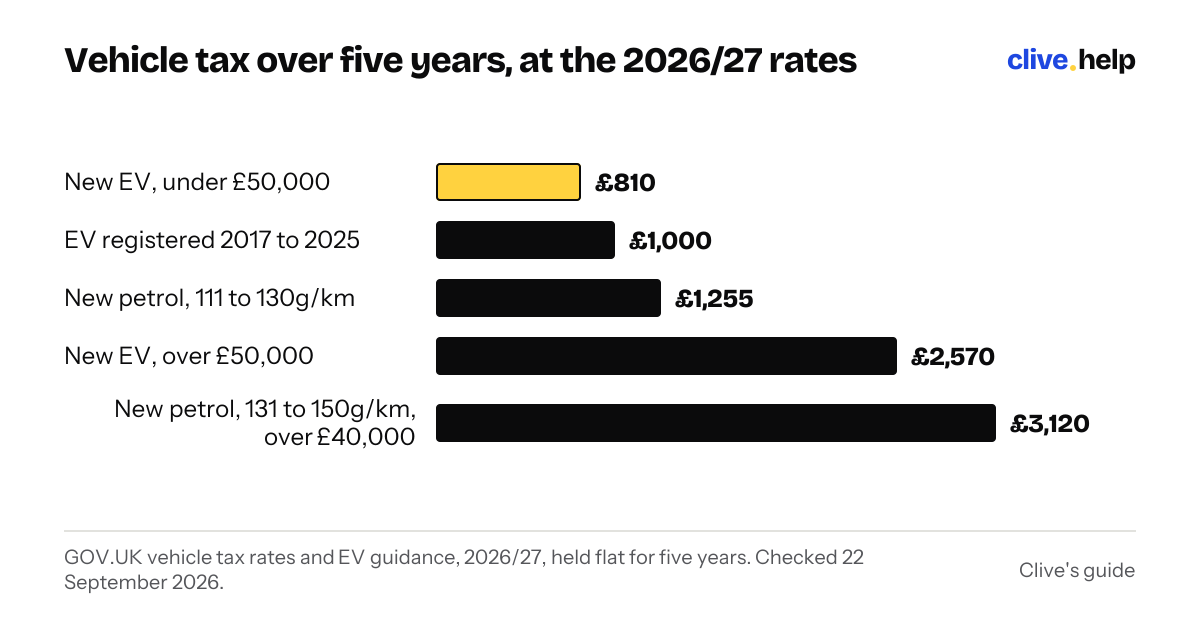
Yes, electric cars pay road tax now. A new EV costs £10 for its first year and £200 a year after that, the same standard rate as petrol. If its list price was over £50,000 there's another £440 a year for five years on top. Over five years that's £810 for a cheaper EV and £2,570 for a dear one.
Do electric cars pay road tax?
Yes, since 1 April 2025 every electric car pays vehicle excise duty, and the free years are over for old ones as well as new.
For years the answer was no, and plenty of people still think it is. It changed on 1 April 2025. From that day every electric car pays VED, whether it was registered last week or in 2015, and the £10 discount that hybrids used to get went at the same time. The only difference between an EV and a petrol car now is the first year, and, for dearer cars, where the expensive car supplement kicks in.
It's still a small line on the bill next to the electricity, which is why I cover it on the whole running-cost page rather than losing sleep over it. But it's a line that used to be zero, so it's worth knowing what it is before the reminder lands.
What are the rates?
For the year from 1 April 2026 a new EV pays £10 in its first year and the £200 standard rate every year after that.
Two numbers, and one of them is the same as everybody else's. The first-year rate, which is set by what the car emits, is £10 for a zero-emission car. The standard rate from the second year on is £200 for the tax year running 1 April 2026 to 31 March 2027, and that £200 is the same figure a petrol or diesel car pays.
The first year is where an EV still wins, and it isn't close. A petrol hatchback in the 111 to 130g/km band pays £455 for its first year; one in the 131 to 150g/km band pays £560; and the bands above that run past £1,000. So the EV saves several hundred pounds in year one, and then it's level pegging.
Both figures go up most Aprils, usually in line with inflation, so treat £200 as this year's number rather than a promise. The table below uses this year's rates all the way through, which will be a little under what you actually pay.
Vehicle tax over the first five years at the rates for 1 April 2026 to 31 March 2027, held flat.
| Car | Year 1 | Years 2 to 5, each | Five years |
|---|---|---|---|
| New EV, list price under £50,000 | £10 | £200 | £810 |
| New EV, list price over £50,000 | £10 | £640 | £2,570 |
| New petrol, 111 to 130g/km, under £40,000 | £455 | £200 | £1,255 |
| New petrol, 131 to 150g/km, over £40,000 | £560 | £640 | £3,120 |
| EV registered April 2017 to March 2025 | £200 | £200 | £1,000 |
| EV registered before April 2017 | £20 | £20 | £100 |
GOV.UK vehicle tax rate tables and the guidance for electric and low-emission vehicles, 2026/27 rates. Rates usually rise each April, so real totals will be slightly higher. Last checked 22 September 2026.
What is the expensive car supplement?
It's an extra £440 a year for five years, from the second year, on any EV registered since 1 April 2025 with a list price over £50,000.
The expensive car supplement is the government's luxury car tax: an additional rate on top of the standard one, paid for five years starting from the second time the car is taxed. For the year from 1 April 2026 it's £440, so an affected car pays £640 a year in years two to six instead of £200.
The threshold is the part that matters for EVs. For petrol and diesel cars it's a list price over £40,000. For zero-emission cars it was £40,000 too when they were first brought in, which caught a lot of ordinary family EVs, and from 1 April 2026 it went up to £50,000, as the BVRLA set out in March 2026. That higher threshold applies to electric cars registered on or after 1 April 2025, so a car registered in the first year of the rules benefits from it when it's re-taxed, not just cars bought after the change, as Drive Electric confirmed.
Two things to check before you sign. It's the list price that counts, including options and before any discount, not what you paid. And it applies to leased and company cars just the same, so a £52,000 car on a lease carries the £440 in the monthly figure somewhere. If you're near the line, a £49,500 spec of the same car saves £2,200 over the five years.
What if my EV was registered before April 2025?
An EV registered between 1 April 2017 and 31 March 2025 pays the £200 standard rate and no supplement, and one registered before April 2017 pays £20.
Older EVs pay too, but less. A car registered between 1 April 2017 and 31 March 2025 moved straight onto the £200 standard rate, and it never pays the expensive car supplement, however much it cost new. That's worth knowing if you're looking at a two-year-old car that listed at £55,000: it dodges £2,200 of tax that the same car registered a few months later doesn't.
Anything registered before 1 April 2017 sits in the old emissions bands, and a zero-emission car in those bands pays £20 a year. So an early Leaf or Zoe is about the cheapest thing on the road to tax, which is a small consolation for the range.
What does it add up to over five years?
Roughly £810 for a new EV under the threshold, £2,570 for one over it, and £1,255 for a typical new petrol hatchback, at this year's rates.
The table above does the sums at the 2026/27 rates. A new EV under £50,000 pays £10 then four years of £200: £810. Over £50,000 it's £10 then four years of £640: £2,570. A new petrol hatchback in the common 111 to 130g/km band pays £455 then four years of £200: £1,255. A dearer petrol car in the 131 to 150g/km band and over £40,000 pays £560 then four years of £640: £3,120.
So over five years a cheaper EV saves about £445 in tax against a comparable petrol car, and a dear EV still comes out about £550 ahead of a dear petrol one. It's not nothing, but it's a fraction of what the electricity saving is worth if you can charge at home, and picking the right EV tariff moves the bill far more than the tax does. Tax is the line to get right, not the line that decides it.
Sources
- GOV.UK: vehicle tax for electric and low emission vehicles, checked 22 September 2026
- GOV.UK: vehicle tax rates, checked 22 September 2026
- BVRLA: VED changes, expensive car supplement for EVs, March 2026, checked 22 September 2026
- Drive Electric: luxury car tax changes from April 2026, 17 March 2026, checked 22 September 2026
Read next
- What does an EV really cost to run? The whole bill.Charged at home at night, an EV costs about £200 a year less than a petrol car once tax, insurance, servicing and lost value are in. On rapids it's dearer.
- How much does it cost to charge an EV at home?A full charge at home costs £3 to £7 on an EV tariff and £10 to £21 on the price cap, by battery size. The cost per mile, a year's charging, and solar.
- EV depreciation: how much value does it really lose?EVs lose 38 to 42% in three years against 35 to 40% for petrol, and used prices are rising after a 40-month fall. Which hold up, and how to limit it.
- Second-hand EV vs new petrol: five years of costA three-year-old MG4 at £13,149 against a new Kia Ceed at £23,795 over five years: about £13,700 against £27,700 all in, and the used EV wins from day one.