Second-hand EV vs new petrol: five years of cost
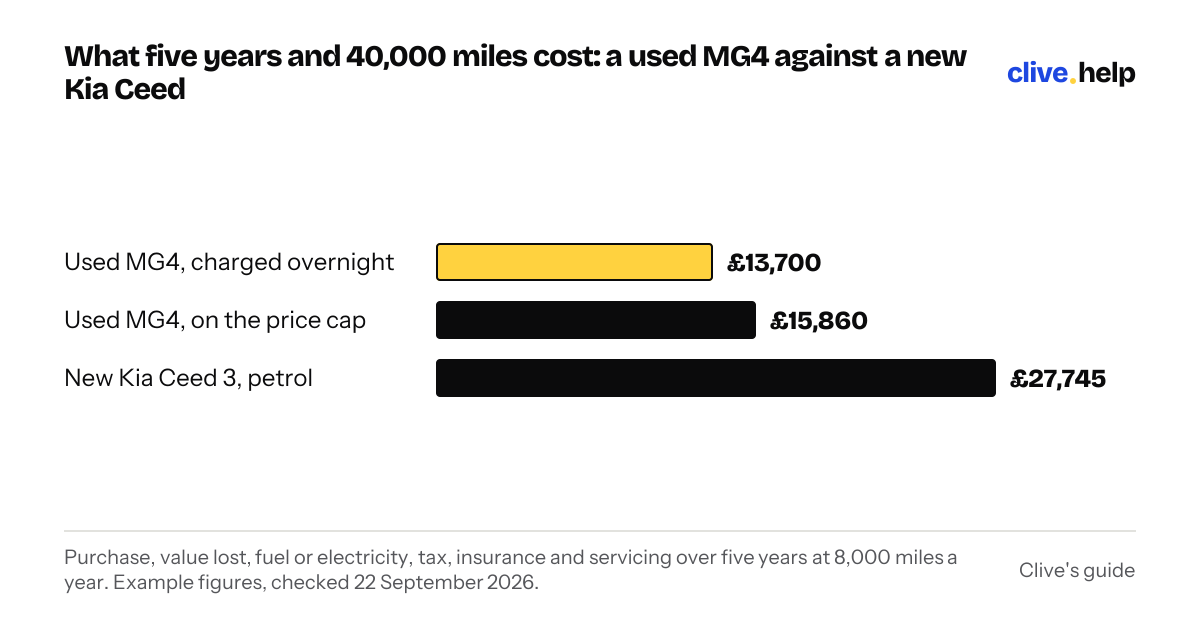
The used EV, by about £14,000 over five years. A three-year-old MG4 bought for £13,149 costs roughly £13,700 to own and run for five years at 8,000 miles a year, charged at home overnight. A new Kia Ceed at £23,795 costs about £27,700. Half the gap is the price you didn't pay, the rest is fuel.
What do they cost to buy?
A three-year-old MG4 SE is about £13,000 in September 2026, and a new Kia Ceed 3 with the 1.5 petrol engine is £23,795 on the road.
I've picked two real cars so the sums are real. The used one is a 2023 MG4 SE with the 51kWh battery, the cheapest sensible family EV of its year. On 22 September 2026 Motorpoint had one with 19,812 miles at £13,149, and the 64kWh Long Range versions at £13,599 to £15,249. Auto Trader listed 454 used 2023 MG4s the same day, from £8,500 for the high-mileage ones. I'll use £13,149.
The new one is a Kia Ceed 3, a 1.5-litre petrol hatchback the same size as the MG. Kia's price list puts the manual at £23,795 on the road, with 49.6mpg on the official test. That list is for the 2022 model year, which is the most recent Kia has published in full; the 2026 car is a little dearer, so the gap below is if anything a touch bigger than I've shown.
So before either car has turned a wheel, the new petrol car has cost £10,646 more. Everything else on this page is the question of whether the next five years claw that back. They don't.
What does each lose over five years?
The new Ceed loses about £15,500 of its £23,795, and the used MG4 loses about £7,900 of its £13,149, because the steepest part of the curve has already happened to it.
This is the line that decides it, so here is the working. Motorway's depreciation guide, built on sales from January 2022 to July 2025, puts a typical UK car at 15% to 35% down after one year, 40% to 60% after three, 60% to 70% after five, and about 80% by eight to ten. The shape matters more than the exact numbers: the first owner pays for the cliff, the second owner pays for the slope.
Take the middle of each range. The new Ceed loses 65% in five years, which is about £15,500, leaving it worth roughly £8,300 at eight years old. The MG4 is already three years old and about halfway down; five years on it's an eight-year-old car worth about 20% of new, which is 40% of what you paid. That's a loss of about £7,900, leaving it worth about £5,300.
Two caveats, both in the EV's favour. Used EV prices fell hard in 2023 and 2024 and stopped falling in 2026, so the £13,149 is bought after the worst of it; the depreciation guide has the data. And an eight-year-old MG4 with a healthy battery is a more saleable thing than an eight-year-old petrol Ceed, because the running costs stay low for whoever buys it next.
Five years of ownership at 8,000 miles a year: a 2023 MG4 SE bought used at £13,149 against a new Kia Ceed 3 at £23,795.
| Line | Used MG4, charged at home overnight | Used MG4, on the price cap | New Kia Ceed 3 |
|---|---|---|---|
| Bought for | £13,149 | £13,149 | £23,795 |
| Value lost over five years | £7,900 | £7,900 | £15,500 |
| Electricity or petrol | £940 | £3,100 | £6,300 |
| Road tax | £1,000 | £1,000 | £1,255 |
| Insurance | £3,035 | £3,035 | £3,665 |
| Servicing | £825 | £825 | £1,025 |
| Five-year total | £13,700 | £15,860 | £27,745 |
Prices from Motorpoint (22 September 2026) and Kia's 2022 model-year list; electricity at 8p (Intelligent Octopus Go) and 26.32p (Ofgem cap, October to December 2026) at 3.4 miles per kWh; petrol at 172p a litre and 49.6mpg; tax from GOV.UK 2026/27 tables; insurance from Confused.com (March to May 2026); servicing from BestChargers. The value-lost lines are estimates from the midpoints of Motorway's depreciation ranges, not valuations of these cars. Last checked 22 September 2026.
Example figuresWhat do the running lines add up to?
About £5,800 for the MG4 over five years against £12,200 for the Ceed, with electricity at £190 a year against petrol at £1,260 doing most of it.
Fuel first. At 8,000 miles a year and 3.4 miles per kWh, the MG4 needs about 2,350kWh a year. On Intelligent Octopus Go at 8p that's £190; on the Ofgem price cap of 26.32p for October to December 2026 it's £620. The Ceed at 49.6mpg and 172p a litre, the UK average for the week ending 21 September 2026, is about 16p a mile, or £1,260 a year. Over five years: £940 against £6,300, or £3,100 against £6,300 if you never get an EV tariff.
Tax is close. An EV registered between April 2017 and March 2025 pays the £200 standard rate and never the expensive-car supplement, per GOV.UK, so £1,000 over five years. The Ceed, at 129g/km, pays £455 in its first year and £200 after that on the 2026/27 tables: £1,255. The road tax guide has every band.
Insurance and servicing go the EV's way too, a little. Confused.com's average comprehensive premium for March to May 2026 was £607 for an electric car and £733 for petrol, so £3,035 against £3,665 over five years. Servicing, per BestChargers, averages £165 a year for an EV and £205 for petrol: £825 against £1,025. Those are averages for all cars, not quotes for these two, so get a real quote before you buy either.
Is a used EV battery a risk?
A small one: across 30,000 cars, Recurrent found under 4% had ever had a battery replaced, 0.3% for cars built since 2022, and the MG4's 8-year battery warranty transfers to you.
This is the question that stops people buying used EVs, so here is the data. Recurrent watches more than 30,000 electric cars and in November 2025 reported that under 4% had ever needed a new battery, including cars over ten years old. For the first generation of EVs it was about 8.5%; for cars built from 2022 onwards it's 0.3%. A 2023 MG4 is in that last group.
Then there's the warranty, which is the part people forget travels with the car. MG's cover is seven years or 80,000 miles on the car and eight years or 100,000 miles on the battery, and it pays out if the battery drops below 70% of its original capacity. Both transfer to the next owner automatically. Buy a 2023 car in 2026 and you have five years of battery cover left, which is the whole of this comparison.
What to do on the forecourt: ask for the state-of-health reading, which the dealer can pull from the car in a minute, and walk away from anything under about 90% at three years old. The battery guide explains what the number means and what wears it.
So which wins over five years?
The used MG4, by about £14,000 charged at home overnight, £11,900 on the price cap, and still about £6,000 if you only ever used public rapid chargers.
Add it up. The MG4: £7,900 lost in value, £940 of electricity, £1,000 of tax, £3,035 of insurance and £825 of servicing, about £13,700 for five years. The Ceed: £15,500 lost, £6,300 of petrol, £1,255 of tax, £3,665 of insurance and £1,025 of servicing, about £27,700. The table sets it out.
Where does the £14,000 come from? Roughly £7,600 is depreciation you skipped by buying a car somebody else bought new, and £5,400 is fuel. So about half of the win is the EV and half is the used-ness. A three-year-old Ceed would beat a new Ceed too. What the EV adds on top of any used car is the fuel line, and that only fully arrives with a driveway and an EV tariff.
Move the charging and the gap narrows but doesn't close. On the price cap the MG4 costs about £15,900 and wins by £11,900. Charged only on public rapids at Zapmap's August 2026 average of 77p a kWh, its electricity is £1,810 a year and the five-year total is about £21,800, still £6,000 ahead of the new petrol car. If you haven't got a plug of your own, the no-driveway guide is where I say whether that's a life you'd want. The wider sums for a new EV against a new petrol car are on the running costs page, and they come out much closer, which tells you where the value is.
Sources
- Motorpoint: used MG4 listings, 22 September 2026, checked 22 September 2026
- Auto Trader: used 2023 MG4 cars for sale, 22 September 2026, checked 22 September 2026
- Kia UK via Furrows: Ceed model family pricing and specification (2022 model year), checked 22 September 2026
- Motorway: UK car depreciation guide, data January 2022 to July 2025, checked 22 September 2026
- Octopus Energy: Intelligent Octopus Go rates, checked 21 September 2026
- Ofgem: energy price cap unit rates and standing charges, 1 October to 31 December 2026, checked 21 September 2026
- PetrolPrices.co.uk fuel price index, week ending 21 September 2026, checked 22 September 2026
- Zapmap Price Index, August 2026, checked 21 September 2026
- GOV.UK: vehicle tax for electric and low emission vehicles, checked 22 September 2026
- GOV.UK: vehicle tax rates, checked 22 September 2026
- Confused.com: electric car insurance, average premiums March to May 2026, checked 22 September 2026
- BestChargers: electric car servicing costs UK 2026, checked 22 September 2026
- Recurrent: how long EV batteries last, 30,000 cars, November 2025, checked 22 September 2026
- Motorpoint: MG 7-year warranty explained, and the 8-year battery cover, checked 22 September 2026
Read next
- What does an EV really cost to run? The whole bill.Charged at home at night, an EV costs about £200 a year less than a petrol car once tax, insurance, servicing and lost value are in. On rapids it's dearer.
- EV depreciation: how much value does it really lose?EVs lose 38 to 42% in three years against 35 to 40% for petrol, and used prices are rising after a 40-month fall. Which hold up, and how to limit it.
- EV road tax: what you pay now, and over five yearsElectric cars pay road tax: £10 in the first year, then £200 a year, plus £440 a year for five years if the list price is over £50,000. The five-year sums.