Kona Electric vs Kona: what each really costs a year
The electric Kona, by about £600 a year at 8,000 miles, if you charge at home overnight. It costs £7,800 more to buy, so it loses about £600 a year more in value, but it saves £1,150 on electricity against petrol and £550 on first-year tax. Charge on the public network and the petrol Kona wins.
What does the fuel or electricity cost?
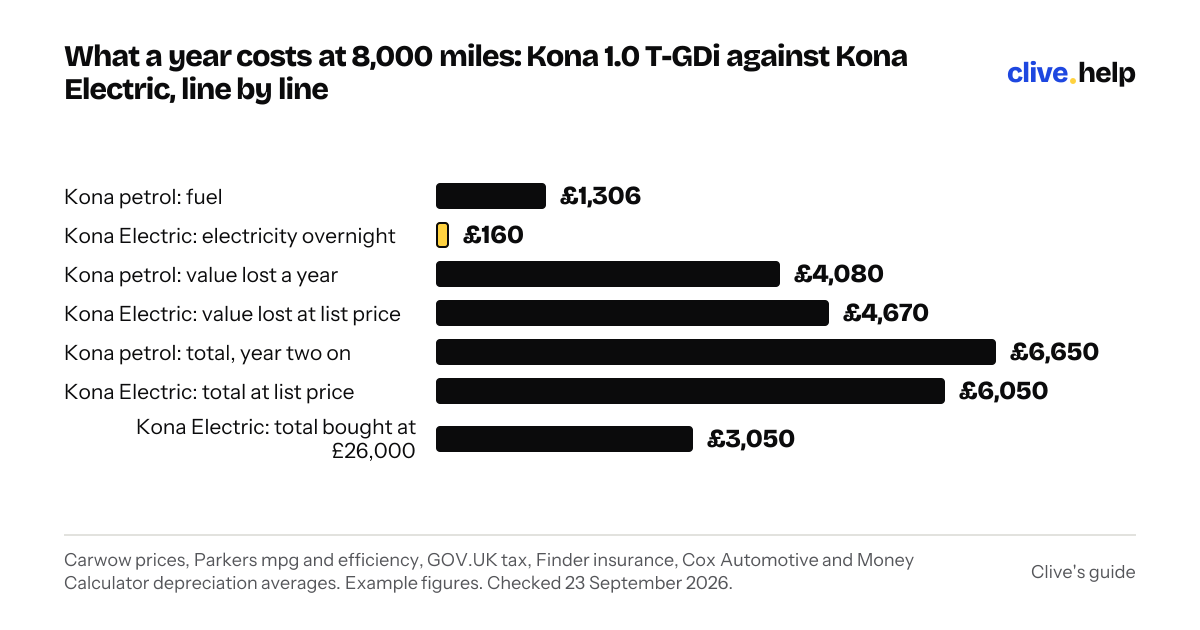
About £160 a year for the Kona Electric charged overnight and £1,306 of petrol for the 1.0 T-GDi, so the electric one saves about £1,150 a year at 8,000 miles.
This is the line that decides it. Parkers puts the Kona Electric at 3.7 to 4.3 miles per kWh, so I've used 4.0, which is 2,000kWh for 8,000 miles. On Intelligent Octopus Go at 8p a kWh from 1 October 2026 that's £160 a year; on the October price cap of 26.32p it's £526. The petrol Kona's 1.0 T-GDi does 47.9mpg on the official test, which is 759 litres a year, and at 172p a litre, the UK average in the week ending 21 September 2026, that's £1,306. The hybrid Kona does 60.1mpg, which brings its petrol down to about £1,040, and costs £4,250 more than the 1.0 to buy.
So the gap is £1,150 a year with a driveway and an EV tariff, and £780 on the standard rate. Without a driveway, the public network at 54p to 77p a kWh puts the Kona Electric at £1,080 to £1,540, which is the petrol car's bill or more, and the no-driveway guide is the one to read before anything on this page.
What are the tax, insurance and servicing lines?
Tax favours the electric by £550 in year one and is level at £200 after that, servicing is about £35 a year cheaper, and insurance is the line to check because the electric sits fifteen groups higher.
Vehicle tax first. A new Kona Electric pays £10 in its first year and £200 a year from the second, on the GOV.UK rates for 2026/27, and at £35,000 it is well under the £50,000 supplement line. The petrol 1.0 T-GDi emits 134g/km, which is the 131 to 150 band at £560 for year one, then the same £200. That's £550 saved once. The road tax guide has every band.
Servicing is a small win. Electrifying puts a minor service on the Kona Electric at about £129 and a major one at about £210, so alternating them is £170 a year. Hyundai doesn't publish its service plan prices on a page I could check, so for the petrol car I've used the £205 a year that BestChargers quotes for a petrol service, which Parkers says is due every 10,000 miles or a year. The servicing guide has what the garage actually does on each.
Insurance is the one unknown. Parkers puts the petrol 1.0T Advance in group 16 and the electric Advance 65kWh in group 31. Finder's average for a Kona was £854 a year in May 2025, across every engine, and I've used it for both cars because nobody publishes a Kona Electric average. Fifteen groups is a real gap, so treat the electric's line as a floor and get a quote on the exact trim.
What a year costs at 8,000 miles for a Kona 1.0 T-GDi Advance (£27,205) and a Kona Electric Advance 65kWh (£35,000), both bought at list price.
| Line | Kona 1.0 T-GDi | Kona Electric 65kWh |
|---|---|---|
| Fuel or electricity (47.9mpg at 172p; 4.0 miles per kWh at 8p overnight) | £1,306 | £160 |
| Vehicle tax, year one | £560 | £10 |
| Vehicle tax, standard rate from year two | £200 | £200 |
| Insurance (Kona average, May 2025; group 16 vs 31) | £854 | £854 or more |
| Servicing | £205 | £170 |
| Value lost per year over three years (45% vs 40% of list) | £4,080 | £4,670 |
| Total, years two onwards | £6,650 | £6,050 |
| Total if the electric is bought at £26,000 | £6,650 | £3,050 |
Prices from Carwow, September 2026; efficiency and mpg from Parkers; tax from GOV.UK; insurance groups from Parkers and the premium from Finder's May 2025 Kona average, used for both cars; servicing from Electrifying (electric) and BestChargers (petrol); depreciation is Cox Automotive's EV average and The Money Calculator's Hyundai average, not forecasts for these cars. The insurance and depreciation lines are estimates. Last checked 23 September 2026.
Example figuresWhich one loses more value?
The electric, by about £600 a year, because it costs £7,800 more to start with; as a percentage the two are close, at about 40% against 45% over three years.
There's no published forecast for these exact cars that I could fetch, so this line is an estimate and the table says so. Cox Automotive put average EV depreciation at 38 to 42% after three years in its August 2026 note, against 35 to 40% for petrol, so I've used 40% for the Kona Electric. The Money Calculator's average for Hyundai as a make is 45% over three years, and I've used that for the petrol Kona.
In pounds: 40% of the £35,000 Advance 65kWh is £14,000 gone in three years, or £4,670 a year. 45% of the £27,205 1.0T Advance is £12,240, or £4,080 a year. So the electric loses about £600 a year more, which is the price of starting £7,800 higher. That is the whole reason the sum is close rather than a walkover for the electric car.
Then the discount. Carwow lists the Kona Electric with average savings of £9,223 off list and cash prices from £26,119 in September 2026; the petrol Kona is £4,007 off, from £23,702. A Kona Electric bought at £26,000 and worth £21,000 in three years has lost £1,670 a year, not £4,670. Depreciation is from what you paid, and the electric car is the one with the bigger discount.
So which is cheaper to run?
The Kona Electric, by about £600 a year at list price if it charges at home overnight, by about £230 on the standard rate, and by more still at the discounted price; on public chargers the petrol wins.
Add it up at 8,000 miles, both bought at list. The Kona Electric Advance 65kWh: £160 electricity, £200 tax, £854 insurance, £170 servicing and £4,670 lost value, about £6,050 a year. The petrol 1.0T Advance: £1,306 fuel, £200 tax, £854 insurance, £205 servicing and £4,080 lost value, about £6,650. The electric wins by £600, and the fuel saving is what pays for the extra depreciation with room to spare.
Move the charging and the answer moves. On the price cap the electricity is £526 and the electric's lead is £230. On public rapids at 77p it's £1,540 and the petrol car is £780 a year cheaper. Buy the electric at Carwow's £26,000 and the lost-value line drops by £3,000 a year, which turns a close sum into a clear one. The whole running-cost page shows the same shape for a typical EV, and the Corsa pair shows what happens when the electric car's forecast is much worse.
Who should pick which?
The Kona Electric suits anyone with a driveway and an EV tariff, and especially anyone offered the discount; the petrol or hybrid Kona suits someone parking on the street or driving mostly long motorway days.
- Driveway and an EV tariff. The electric. It's £600 a year ahead at list and £3,000 ahead at the discounted price, and the 65kWh battery's 319-mile official range means a rapid stop is a monthly event rather than a weekly one.
- No driveway. The petrol, or the hybrid if you want 60mpg, unless a charger at work or a lamppost near home changes the sum: the public charging guide has the per-mile numbers.
- Long days, often. The hybrid. 150 miles or more most days means rapids most weeks, and at 77p a kWh that is petrol money for more hassle.
- Buying used. The electric, and it isn't close: the used EV guide does the sum for a three-year-old car that costs £160 a year to fuel.
- Either way, get the insurance quote on the exact trim before the test drive. Fifteen groups is the one line on this page I couldn't pin down.
Sources
- Carwow: Hyundai Kona Electric review, prices and specifications, 2026, checked 23 September 2026
- Carwow: Hyundai Kona review, prices and specifications, 2026, checked 23 September 2026
- Parkers: Hyundai Kona Electric running costs, updated 5 December 2025, checked 23 September 2026
- Parkers: Hyundai Kona mpg and running costs, updated 16 September 2026, checked 23 September 2026
- Octopus Energy: Intelligent Octopus Go rates, checked 21 September 2026
- Ofgem: energy price cap unit rates and standing charges, 1 October to 31 December 2026, checked 21 September 2026
- PetrolPrices.co.uk fuel price index, week ending 21 September 2026, checked 22 September 2026
- GOV.UK: vehicle tax for electric and low emission vehicles, checked 22 September 2026
- GOV.UK: vehicle tax rates, checked 22 September 2026
- Parkers: Kona Electric (2023 on) insurance groups by trim, checked 23 September 2026
- Parkers: Kona (2023 on) insurance groups by trim, checked 23 September 2026
- Finder UK: average Hyundai Kona insurance cost, May 2025, checked 23 September 2026
- Electrifying: Hyundai Kona Electric running costs, insurance and pricing, checked 23 September 2026
- BestChargers: electric car servicing costs UK 2026, checked 23 September 2026
- Cox Automotive: EV vs ICE depreciation and residual values explained, 25 August 2026, checked 23 September 2026
- The Money Calculator: Hyundai three-year depreciation average, checked 23 September 2026
Read next
- What does an EV really cost to run? The whole bill.Charged at home at night, an EV costs about £200 a year less than a petrol car once tax, insurance, servicing and lost value are in. On rapids it's dearer.
- Corsa Electric vs Corsa: what each really costs a yearThe electric Corsa saves £1,000 a year on fuel, then loses more than that in value at list price. Each line at 8,000 miles, and the discount that flips it.
- Renault 5 vs Clio: what each really costs a yearA Renault 5 charged at home costs £4,980 a year against £5,910 for a petrol Clio at 8,000 miles. Fuel, tax, insurance, servicing and lost value.