Tesla Model 3 vs BMW 3 Series: what each really costs a year
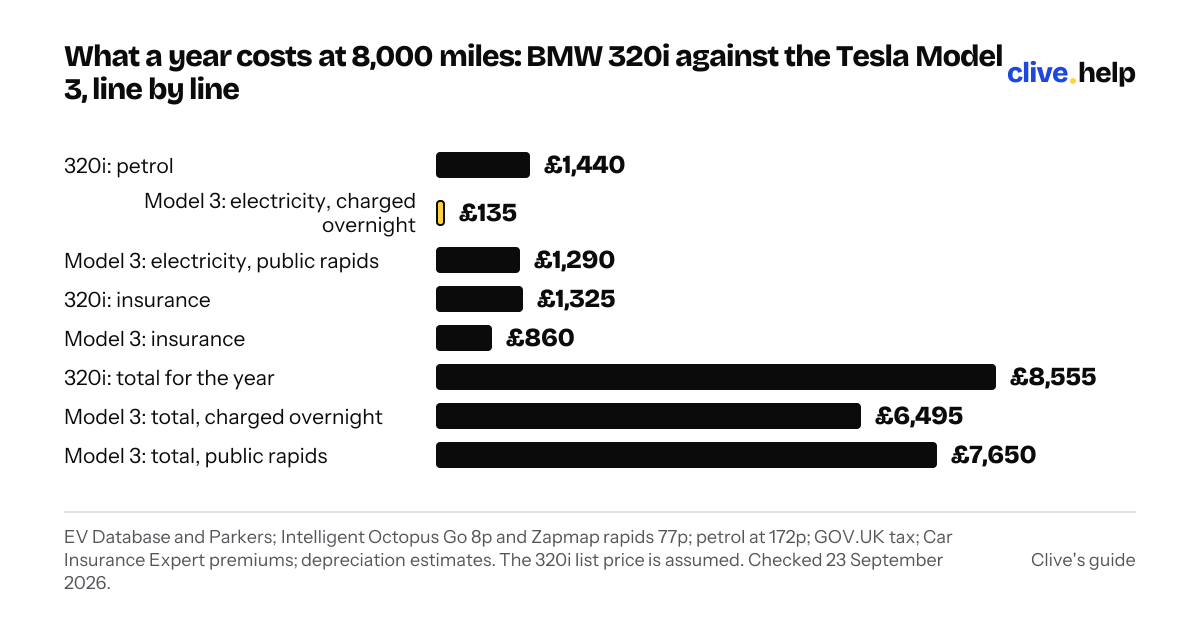
About £6,500 a year for a Model 3 Rear-Wheel Drive against £8,550 for a BMW 320i at 8,000 miles, if you charge at home overnight. The Tesla is cheaper on every line but tax, where they're level: £135 of electricity against £1,440 of petrol, and £860 to insure against about £1,325. Even on public rapids it stays £900 ahead.
What does the fuel or electricity cost?
About £135 a year of overnight electricity for the Model 3 against £1,440 of petrol for the 320i, which is 1.7p a mile against 18p.
This is the line that decides it, so start here. The Model 3 Rear-Wheel Drive is rated at 209Wh a mile on the official WLTP test, according to EV Database, so 8,000 miles is about 1,670kWh. On Intelligent Octopus Go at 8p a kWh overnight that's £135 a year, or 1.7p a mile. On the Ofgem price cap of 26.32p from October to December 2026 it's £440, or 5.5p a mile. On public rapids at Zapmap's August 2026 average of 77p it's about £1,290, or 16p a mile.
The 320i does 43.5mpg on the official figure, per Parkers, so 8,000 miles is 836 litres. At 172p a litre, the UK average for the week ending 21 September 2026 on PetrolPrices.co.uk, that's £1,440 a year, or 18p a mile. Real-world economy on a petrol saloon is usually under the official number, so treat £1,440 as the floor rather than the bill.
So the gap on this line is £1,300 a year with a driveway and an EV tariff, £1,000 on the standard rate, and still £150 if you never plug in anywhere but a rapid. The home charging guide has the sums by battery size, and the tariff comparison ranks the overnight rates.
What are the tax, insurance and servicing lines?
Tax is £200 a year for both after the first year, insurance is about £860 for the Tesla against £1,325 for the BMW, and servicing is about £100 against £260.
Tax first, because it's the one people ask about. The Model 3 Rear-Wheel Drive lists at £37,990, well under the £50,000 line where the expensive car supplement starts for EVs, so it pays £10 in year one and £200 a year after that on GOV.UK's EV rates. The Long Range and Performance versions cross £50,000, and that costs £440 a year for five years, so the trim decides £2,200 of tax. The 320i pays the same £200 standard rate, but its line is £40,000, and the M Sport sits right on it: tick a few options and the same £440 applies to the BMW instead. Its first year is dearer too, because the first-year rate is set by CO2 and a 320i sits in a band that pays several hundred pounds where the Tesla pays £10.
Insurance is where the folklore is wrong. Car Insurance Expert puts a Model 3 Rear-Wheel Drive, group 36, at about £860 a year for a typical adult with a clean licence, updated 6 September 2026. Its 3 Series page, updated 20 September, puts a 320i M Sport in groups 28 to 30 at £1,200 to £1,450, so I've used £1,325. A higher group and a lower premium sounds backwards, and it is: the group is about repair cost, the premium is about who crashes what, and 3 Series drivers cost insurers more. Get your own quote for the exact car before you believe either number.
Servicing is the easy one. Tesla doesn't require an annual service at all: the schedule, per KMC Electric, is a brake fluid check and cabin filter every two years and tyre rotation every 6,250 miles, which comes to about £100 a year at an independent. A BMW 3 Series full service is £205 to £320 on MyRepairCost's 2026 list, so call it £260 a year. The servicing guide has what the garage actually does on each.
What a year costs, line by line, for a Tesla Model 3 Rear-Wheel Drive and a BMW 320i M Sport at 8,000 miles a year.
| Line | BMW 320i (43.5mpg) | Model 3 RWD, charged at home overnight | Model 3 RWD, charged on public rapids |
|---|---|---|---|
| Fuel or electricity | £1,440 | £135 | £1,290 |
| Road tax (standard rate, years 2 to 6) | £200 | £200 | £200 |
| Insurance (Car Insurance Expert, September 2026) | £1,325 | £860 | £860 |
| Servicing | £260 | £100 | £100 |
| Value lost (41% and 40% over three years, on list prices of £37,990 and about £40,000) | £5,330 | £5,200 | £5,200 |
| Total for the year | £8,555 | £6,495 | £7,650 |
Model 3 consumption and £37,990 price from EV Database; 320i mpg from Parkers; electricity at 8p (Intelligent Octopus Go) and 77p (Zapmap, August 2026); petrol at 172p (PetrolPrices.co.uk, week ending 21 September 2026); tax from GOV.UK; insurance from Car Insurance Expert; servicing from KMC Electric and MyRepairCost; depreciation from Motorway and The Money Calculator. The 320i's £40,000 list price is an assumption: BMW's own price page wouldn't load when I checked, and dealer listings ran from about £40,000 to £49,000 depending on spec. Last checked 23 September 2026.
Example figuresWhich one loses more value?
Neither, really: the Model 3 loses a little over 40% in three years and the 3 Series about 40%, which is £5,200 and £5,300 a year on these list prices.
This is the line that usually sinks an EV against a petrol car, and here it doesn't. Motorway's 2026 depreciation guide has the Model 3 losing a little over 40% after three years, one of the best figures of any EV. The Money Calculator's 3 Series estimate is 40% over the same three years. In pounds, 41% of £37,990 is about £15,600, or £5,200 a year; 40% of a £40,000 320i is £16,000, or £5,330 a year.
Two caveats. Both are averages across a model line, not a quote for your car, and used EV prices moved a lot between 2023 and 2026, so a three-year-old figure is a better guide than a five-year-old one. And the Tesla's number depends on Tesla not cutting new prices again, which it has done before and which drops every used one with it. The depreciation guide has the wider picture.
So which is cheaper to run?
The Model 3, by about £2,050 a year charged at home overnight, £1,750 on the standard rate, and £900 if you only ever use public rapids.
Add the lines up for 8,000 miles. The Model 3, charged overnight: £135 electricity, £200 tax, £860 insurance, £100 servicing and £5,200 lost value, about £6,500. The 320i: £1,440 petrol, £200 tax, £1,325 insurance, £260 servicing and £5,330 lost value, about £8,550. That's a £2,050 gap, and unlike the typical EV against a typical petrol car, where lost value eats the fuel saving, here the two cars lose the same and the Tesla wins on fuel, insurance and servicing at once.
Move the charging and the gap shrinks but doesn't close. On the price cap the Tesla's electricity is £440 and it's £1,750 ahead. On rapids at 77p it's £1,290 and still £900 ahead, because £465 of insurance and £160 of servicing are there whatever you plug into. Drive 15,000 miles and the overnight gap grows to about £3,200, since fuel scales and the rest doesn't.
Who should pick which?
Anyone with a driveway or a work charger should pick the Model 3 on cost alone, and the 320i only makes sense if you can't charge anywhere but rapids and value the badge over £900 a year.
The Model 3 if you can plug in at home or at work. At £6,500 a year against £8,550 it isn't a close call, and a two-day-a-week work charger gets you most of the way to the overnight figure. Pick the Rear-Wheel Drive unless you need the range: it stays under the £50,000 supplement line and its insurance group is the lowest in the range.
The 320i if there's no charger within a mile of home and none at work, and you'd resent a weekly rapid stop more than you'd miss £900 a year. That's a real position, and the no-driveway guide is where I say who it applies to. If you're on that street and still want the Tesla, the weekly routine there is built for it.
And if the numbers on this page don't match your miles or your tariff, the cost calculator will do them with yours.
Sources
- EV Database: Tesla Model 3 RWD (Highland), UK price and WLTP consumption, checked 23 September 2026
- Parkers: BMW 3 Series mpg and running costs, updated 9 April 2026, checked 23 September 2026
- Octopus Energy: Intelligent Octopus Go rates, checked 21 September 2026
- Ofgem: energy price cap unit rates and standing charges, 1 October to 31 December 2026, checked 21 September 2026
- Zapmap Price Index, August 2026, checked 21 September 2026
- PetrolPrices.co.uk fuel price index, week ending 21 September 2026, checked 22 September 2026
- GOV.UK: vehicle tax for electric and low emission vehicles, checked 22 September 2026
- GOV.UK: vehicle tax rates, checked 22 September 2026
- Car Insurance Expert: Tesla Model 3 RWD insurance cost, updated 6 September 2026, checked 23 September 2026
- Car Insurance Expert: BMW 3 Series insurance cost, updated 20 September 2026, checked 23 September 2026
- KMC Electric: Tesla Model 3 service guide, 11 May 2026, checked 23 September 2026
- MyRepairCost: BMW service costs, 2026, checked 23 September 2026
- Motorway: electric car depreciation guide, 2026 update, checked 23 September 2026
- The Money Calculator: BMW 3 Series three-year depreciation estimate, checked 23 September 2026
Read next
- What does an EV really cost to run? The whole bill.Charged at home at night, an EV costs about £200 a year less than a petrol car once tax, insurance, servicing and lost value are in. On rapids it's dearer.
- Corsa Electric vs Corsa: what each really costs a yearThe electric Corsa saves £1,000 a year on fuel, then loses more than that in value at list price. Each line at 8,000 miles, and the discount that flips it.
- MG4 vs Ford Focus: what each really costs a yearThe MG4 against a petrol Focus, line by line at 8,000 miles a year: electricity or fuel, tax, insurance, servicing and what each loses in value.