What a home charger costs to fit
About £950 to £1,150 fitted for a 7kW smart charger in September 2026: Ohme from £949, Pod Point from £999, Octopus from £1,029, all with a standard install included. A long cable run or an old fuse box adds £100 to £900. Renters, flat owners and on-street households get 75% back, up to £500.
What does a home charger cost fitted?
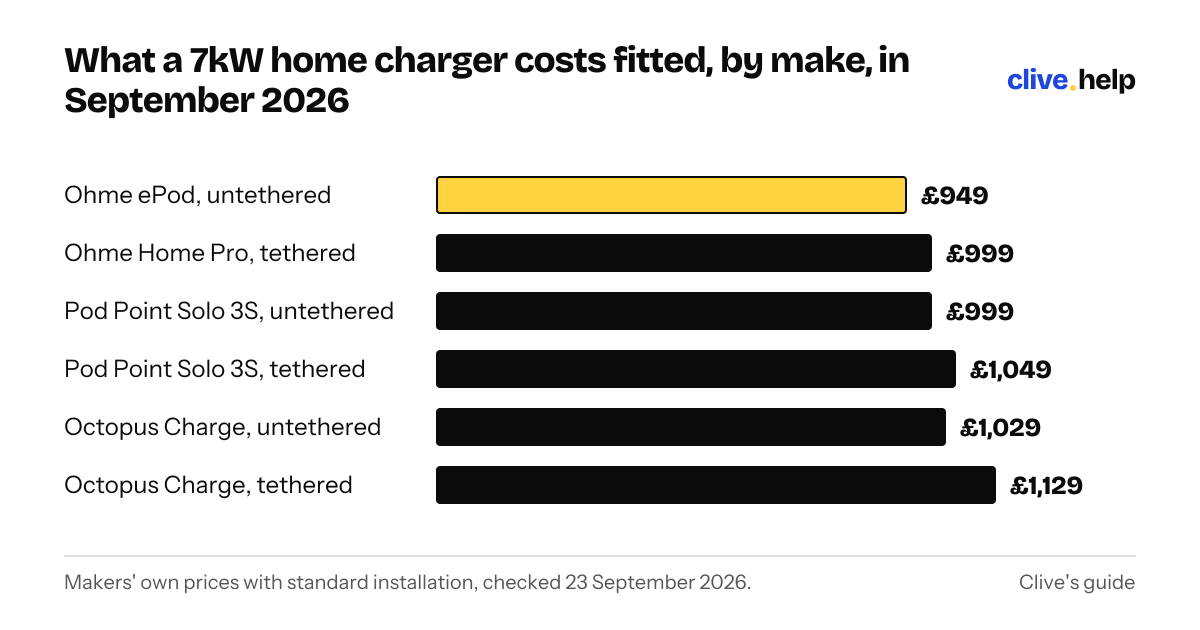
Between £949 and £1,129 in September 2026 for a 7kW smart charger with a standard installation included, depending on the make and whether the cable is attached.
The big names all sell the charger and the fitting as one price now, which makes this easier than it used to be. Ohme is the cheapest of them: the untethered ePod is from £949 and the tethered Home Pro from £999, both with a standard installation and a three-year warranty. Pod Point's Solo 3S is £999 untethered or £1,049 with a 6.5m cable attached, and Pod Point says nine in ten customers qualify for the standard install that's in the price. Octopus Charge is £1,029 untethered and £1,129 tethered, fitted, with about four weeks from order to a socket on the wall.
The myenergi zappi is the odd one out: from £779 for the box alone, with the fitting quoted separately by an installer, which usually lands it in the same £1,000 to £1,200 bracket once the electrician has been. It earns its place on the list because it can charge from solar panels, which the others can't.
Tethered or untethered is the one choice worth a minute. Tethered means the cable lives on the wall, so you plug in and go. Untethered means you use the cable from the boot, which keeps the wall tidy and works with any future car. It's £50 to £100 either way, and I'd pay for tethered if the charger is by the front door and you'll use it every night.
What makes an installation dearer?
A long cable run, an old or full fuse box, or digging, which add £100 to £400, £500 to £900 and £200 to £1,000 respectively on the quotes I see.
The price on the website is for the house the installer hopes you have: fuse box near the front, driveway near the fuse box, a brick wall to fix to. Three things break that. loveelectric's September 2026 guide puts numbers on all of them, and they match the quotes I've seen.
- The cable run. Standard covers about 10 to 15 metres from the fuse box to the charger. If your fuse box is under the stairs at the back and the car sits at the front, every extra metre is cable, clips and time, and it adds £100 to £400.
- The fuse box. A charger needs its own circuit with the right protection. An older consumer unit with no spare way, or one without the protection the regulations ask for, gets replaced, and that's £500 to £900 on its own. It's the single most common extra, and the one nobody mentions until the survey.
- Digging. A cable that has to cross a drive underground, or go through a garden, means a trench and a duct: £200 to £1,000 depending on what it's crossing.
So a straightforward job is a bit over £1,000 and an awkward one can be £2,000. The installer's survey, which is usually a photo of your fuse box and a photo of where the car parks, tells you which you are before anyone commits. Send the photos and ask for the number in writing.
What a 7kW home charger costs fitted in September 2026, from the maker's own price, and what it becomes for someone who gets the £500 grant.
| Charger | Cable | Price fitted | After the £500 grant |
|---|---|---|---|
| Ohme ePod | Untethered | £949 | £449 |
| Ohme Home Pro | Tethered | £999 | £499 |
| Pod Point Solo 3S | Untethered | £999 | £499 |
| Pod Point Solo 3S | Tethered, 6.5m | £1,049 | £549 |
| Octopus Charge | Untethered | £1,029 | £529 |
| Octopus Charge | Tethered | £1,129 | £629 |
| myenergi zappi | Either | £779 for the unit, fitting quoted separately | £279 plus the fitting |
Ohme, Pod Point, Octopus Energy and myenergi published prices, September 2026; standard installation included except the zappi. Grant terms from GOV.UK, 75% up to £500, for eligible renters, flat owners and on-street households. Last checked 23 September 2026.
Are there any grants left?
Yes, two: renters and flat owners with a private space, and households with on-street parking fitting a pavement channel, both get 75% of the cost up to £500 until 31 March 2027.
The old grant for everyone with a driveway ended years ago, but two survive and both went up on 1 April 2026 from £350 to £500. The renters and flat owners grant pays 75% of the cost of buying and fitting a charger, up to £500, if you rent any home or own a flat and have a private off-street space of your own that you're entitled to use. New, used, leased and company cars all count as long as you're the keeper or main driver.
The on-street parking grant is the same money for the opposite situation: no off-street parking at all, and a cross-pavement channel fitted at the same time so the cable reaches the kerb legally. There's a guide to the channel, because it's the part that needs the council.
You don't apply yourself for either. An approved installer claims it and takes it off your bill, so a £999 charger becomes £499 on the invoice. Both close to applications on 31 March 2027, and the installation has to be finished by then, so if you qualify, this is the year.
Do I need one at all?
Not always: a three-pin cable on a timer covers under 40 miles a day, but a wallbox is what gets a whole cheap window into the battery and what most smart tariffs want to talk to.
Every EV comes with, or can be sold with, a three-pin cable that plugs into an ordinary socket. It charges at about 2.3kW, which is 8 miles an hour, so an overnight plug-in adds 60 to 80 miles. If you drive less than 40 miles a day and the socket is somewhere sensible, that works, and plenty of people run a car for a year on it before spending £1,000. The catches are that it wastes more electricity, 13% to 24% against 5% to 7% on a wallbox on E.ON's figures, and it needs a socket on its own circuit that isn't shared with the tumble dryer. The home charging guide has the sums.
The wallbox earns its money in two ways. Speed first: a 7kW charger adds about 25 miles an hour, so the six-hour cheap window on Intelligent Octopus Go is 150 miles at 8p a kWh rather than 50, and the rest at the day rate. Then the tariff itself: the smart tariffs that pick your charging slots need a charger or a car they can control, and zappi, Hypervolt and Indra are on Octopus's list. A three-pin cable on a timer gets you the fixed-window tariffs, which is most of the saving, but not the clever ones.
And if there's nowhere to park the car off the road, none of this applies: the cable has to reach the car. The no-driveway guide is the page you want instead.
What should I ask the installer?
Where the cable will run, whether the fuse box passes, what earthing they'll fit, how the grant is claimed, and what the price becomes if any of those change.
I've watched enough of these go in to know where the arguments start. Ask for the cable route in writing, because a run along the outside wall is standard and a run through the loft isn't. Ask whether the consumer unit passes as it is, and if not, what the replacement costs and whether the charger's own protection means it can stay. Ask about earthing: most modern chargers have the protection built in so no rod is needed, and a quote with an earth rod on it for a charger that doesn't need one is a quote to question.
Then the boring bits that matter. Which tariff will it work with, and is it on the list for the one you want. Who claims the grant, and does the invoice show it taken off. How long the warranty is and whether it covers the installation as well as the box. And get two quotes: the installer networks behind the big names are decent, but a local electrician who does these every week is often £100 to £200 cheaper for the same job, with the same certificate at the end.
Sources
- Ohme: ePod and Home Pro, prices with standard installation, checked 23 September 2026
- Pod Point: Solo 3S home charger, price with standard installation, checked 23 September 2026
- Octopus Energy: Octopus Charge, price with standard installation, checked 23 September 2026
- myenergi: zappi, unit price, checked 23 September 2026
- loveelectric: home EV charger installation costs and what adds to them, 7 September 2026, checked 23 September 2026
- GOV.UK Find a grant: EV chargepoint grant for renters and flat owners, checked 23 September 2026
- GOV.UK Find a grant: EV chargepoint grant for households with on-street parking, checked 23 September 2026
- E.ON Next: where EV charging losses occur, checked 23 September 2026
- Octopus Energy: Intelligent Octopus Go rates, checked 21 September 2026
Read next
- What does an EV really cost to run? The whole bill.Charged at home at night, an EV costs about £200 a year less than a petrol car once tax, insurance, servicing and lost value are in. On rapids it's dearer.
- How much does it cost to charge an EV at home?A full charge at home costs £3 to £7 on an EV tariff and £10 to £21 on the price cap, by battery size. The cost per mile, a year's charging, and solar.
- EV servicing costs explainedAn EV service is £70 to £130 a year against £170 to £250 for petrol, on published plans. What the garage does, the intervals, tyres, brakes and the traps.