Charging at work: how to ask your employer
Ask in writing, with the numbers: the Workplace Charging Scheme pays 75% of the cost of buying and fitting chargers, up to £500 a socket and 40 sockets, until 31 March 2027. A 7kW socket costs an employer about £500 to £1,000 after the grant and pennies a day to run. Two days on it a week replaces a driveway.
Why is a work charger worth asking for?
A car parked at work for eight hours on a 7kW socket takes on a full battery, so two days a week covers 8,000 miles a year without a driveway.
Eight hours at 7kW is 56kWh, which is more than most family EVs hold. So the day you charge at work is a full car, and two of them a week is the whole 150 miles most people drive. The lamppost charger becomes the backup and the rapid becomes rare.
It's also the cheapest public electricity you'll find. Employers who charge at cost pass on their business rate, which is near the 26p domestic cap for October 2026 rather than the 54p public average for August, and a good many charge nothing at all. Either way it's 8p a mile or less, against 16p to 23p out on the network.
What does it cost the employer?
After the grant, a 7kW socket typically costs an employer £500 to £1,000 to install, plus the electricity, which is about £4 for a full charge at business rates.
A basic 7kW workplace charger is roughly £1,000 to £2,000 supplied and fitted per socket, depending on how far the cable runs from the distribution board. The scheme pays 75% of that up to £500, so the employer's share is about £500 to £1,500. Two sockets on one post is the usual first step.
Running it is the small number. 50kWh at a business rate around 25p is about £12, and at the price-cap domestic rate it's £13. If they charge staff at cost, it costs them nothing; if they give it away, it's a benefit that doesn't even show up on your tax, because HMRC has exempted workplace charging of your own car since April 2018, as long as it's open to all staff.
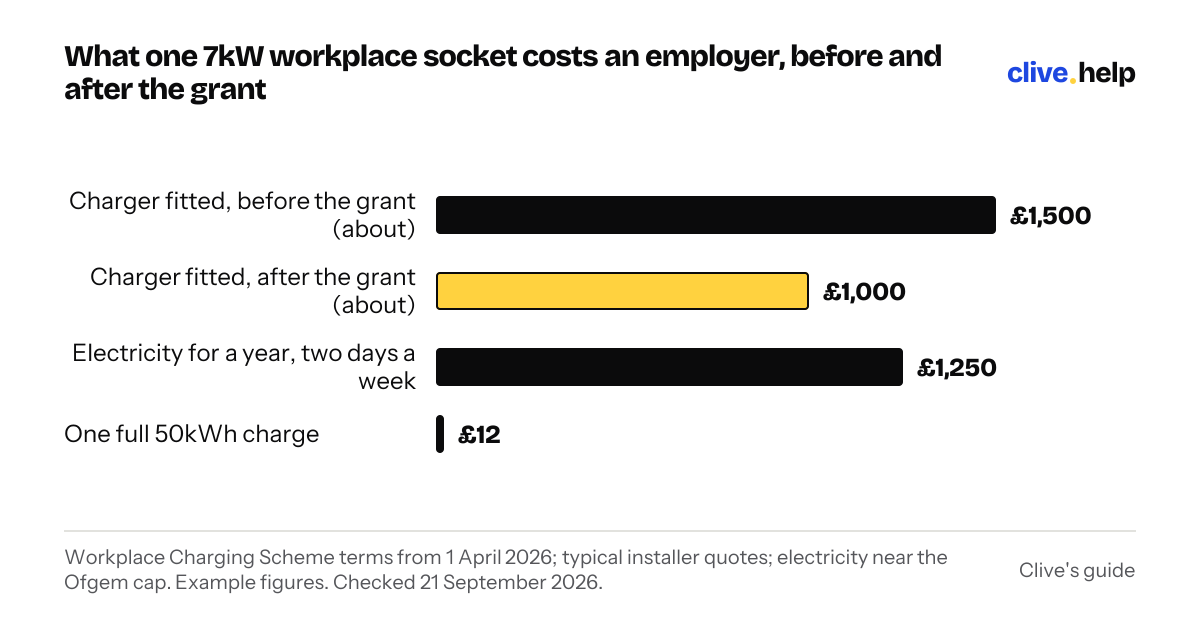
What one 7kW workplace socket costs an employer, before and after the Workplace Charging Scheme grant.
| Line | Before the grant | After the grant |
|---|---|---|
| Charger supplied and fitted, per socket | £1,000 to £2,000 | £500 to £1,500 |
| Grant (75% of cost, capped) | up to £500 | |
| Electricity per full 50kWh charge, at about 25p a kWh | £12 | £12 |
| Electricity per year if used two days a week | £1,250 | £1,250, or £0 if staff pay at cost |
Workplace Charging Scheme terms from 1 April 2026; installation costs are typical installer quotes; electricity at a business rate near the Ofgem cap. Last checked 21 September 2026.
Example figuresWho is eligible for the grant?
Any business, charity or public body that owns its premises or has the landlord's permission, has off-street staff parking, and uses an approved installer.
- Businesses of any size, charities, and public sector bodies, including small accommodation providers.
- The premises must be theirs, or they need the landlord's written say-so.
- Dedicated off-street parking for staff or fleet: a car park, not the street outside.
- Installed by an OZEV-approved installer. The employer applies online for a voucher and hands it to the installer, who takes it off the bill.
- Up to 40 sockets across all their sites, and the installation must be finished by the closing date.
How should I ask?
In writing, to whoever owns facilities or the car park, with the grant, the cost and a headcount of staff who'd use it, so the answer is a decision and not a shrug.
Facilities managers say yes to things that are cheap, funded and wanted by more than one person. So do three things before you send anything: count the colleagues who'd use it (three is enough), note the closing date, and find one approved installer in your area so there's a name to ring. Then send this, or something like it.
Subject: Workplace charging grant closes March 2027
Hi [name]. A few of us ([names]) now drive electric cars and can't charge at home. The government's Workplace Charging Scheme pays 75% of the cost of fitting chargers in our car park, up to £500 per socket, but it closes to applications on 31 March 2027. A two-socket 7kW unit would cost us about £1,000 to £2,000 after the grant, and about £12 of electricity per full charge, which we're happy to pay back at cost. [Installer] is an approved installer and can quote. Could we look at it before the deadline? Happy to do the legwork.
Offer to pay at cost. It removes the only real objection, and once the charger is there most employers stop charging for it anyway.
What if they say no?
Ask what would change it, because the answer is usually parking layout or the landlord, and both can be solved by the next lease or the next budget.
A no in 2026 is often a “not this budget”. Ask whether the landlord is the block, whether there's a lease renewal coming, and whether a single socket on the nearest wall to the board would get through. Meanwhile the street routine still works, and the cost guide shows what a work charger is worth to you, which is the number to bring back next year.
Sources
- GOV.UK Find a grant: Workplace Charging Scheme, checked 21 September 2026
- Ofgem: energy price cap unit rates and standing charges, 1 October to 31 December 2026, checked 21 September 2026
- Zapmap Price Index, August 2026, checked 21 September 2026
- HMRC Employment Income Manual EIM01035: exemption for workplace charging of electric vehicles (ITEPA 2003 s237A), checked 22 September 2026
Read next
- Can you own an EV without a driveway? The honest answer.Yes for many UK drivers, if chargers are a short walk from home or at work. What a mile costs against a driveway, the weekly routine, and when to wait.
- Terraced house, no driveway: a real weekly charging routineA week of EV charging from a terraced street: one overnight lamppost charge, a top-up at the shop, a rapid when it runs long. What it costs and takes.
- Public vs home charging: what a mile really costsHome off-peak charging costs about 2p a mile, a lamppost charger 11p to 19p, a rapid 23p. The price per kWh for each, the sums, and how to cut the bill.